Rising Solar Share Strains India’s Grid, Storage Gap Widens: EAC-PM Paper
Updated: Jul 08, 2026 04:36:26pm

Rising Solar Share Strains India’s Grid, Storage Gap Widens: EAC-PM Paper
New Delhi, Jul 8 (KNN) India's rising solar penetration is causing power-grid stress, with growth in renewables outpacing storage capacity and other measures to smooth the net load, according to a working paper by the Economic Advisory Council to the Prime Minister (EAC-PM).
Highlighting intra-day volatility, Sanjeev Sanyal and Satvik Dev pointed out that India’s power demand surged from 224.1 GW in the morning to 270.8 GW by mid-afternoon on May 21 — a jump of 46.7 GW in under eight hours, larger than the entire peak demand recorded by the United Kingdom grid in 2025.
Electricity prices showed a similar pattern, with a unit of power scheduled for delivery at 1 pm on the India Energy Exchange's day-ahead market clearing at Rs 1.56, while the same unit scheduled for 6:30 pm cleared at Rs 10, the market's price ceiling.
"Peak demand and peak price often fall at different hours of the day, and the gap between them has become an important feature of the modern Indian grid," the authors wrote.
Signals of Grid Stress
The paper identified three signals of stress on the grid — fluctuating prices, curtailment of solar power, and power shortages.
About 24 GWh of solar power was wasted daily in May due to curtailment, resulting from a lack of system flexibility and transmission constraints, enough to power more than a quarter of Delhi for an entire day. The grid also fell short of non-solar-hour peak demand on 36 days in April-May, compared with only six days for solar-hour peak demand.
The authors said grid stress is reflected in the summer ‘duck curve' and winter ‘camel curve’, where solar-driven mid-day dips are followed by sharp demand surges when sunlight fades. India is not short of power mid-day; the strain arises when solar output falls, and it is intensifying each year, the paper noted.
Battery Storage Shortfall
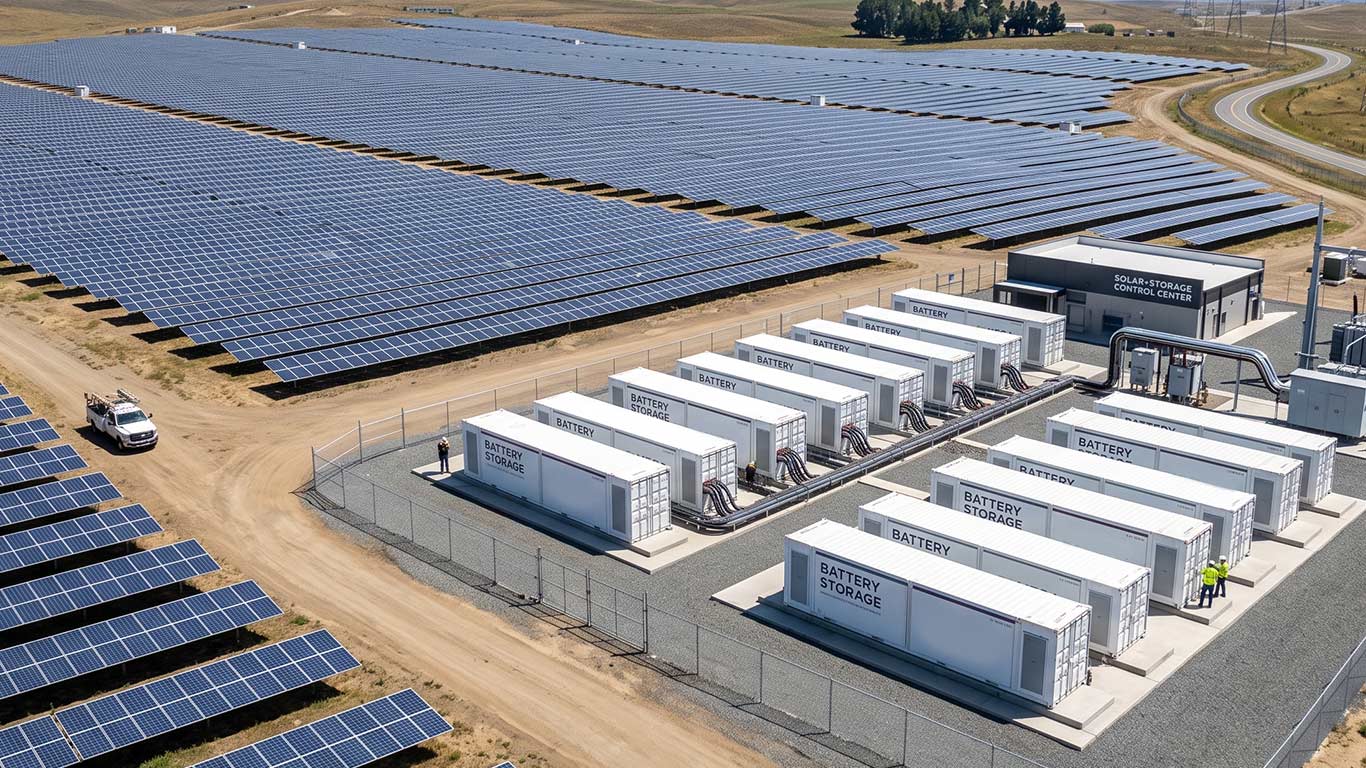
The paper said slow battery storage adoption is the key constraint, noting it as “the most direct solution”. While pumped hydro is near its target, battery capacity — at just 0.27 GW — remains well below the National Electricity Plan goal of 8.68 GW for 2026–27, making the storage deficit largely a battery shortfall.
Highlighting the scale gap, the study estimated that flattening even half of a summer evening ramp would require 130 GWh of discharge during the 1–8 pm window, compared with only 23.8 GWh currently delivered daily — underscoring that existing storage, while helpful at the margin, is insufficient to materially reshape demand patterns.
Shift From Capacity to Flexibility
The authors noted that India’s solar growth has shifted the key constraint from generation to grid flexibility, requiring more storage, demand response and time-of-day pricing, adding that the challenge is no longer how much power is generated, but when and how flexibly it can be supplied.
Citing California’s grid as a reference point, the paper highlighted how grid-scale batteries have compressed evening net-load swings by more than half through solar shifting. It argued that replicating such flexibility will be critical for India, while welcoming policy moves to strengthen storage, demand response and time-of-day pricing.
(KNN Bureau)







 Loading...