Tax Cuts and Assured Demand Vital To Scale India's Biogas Sector: CII Report
Updated: Jul 03, 2026 03:53:18pm

Tax Cuts and Assured Demand Vital To Scale India's Biogas Sector: CII Report
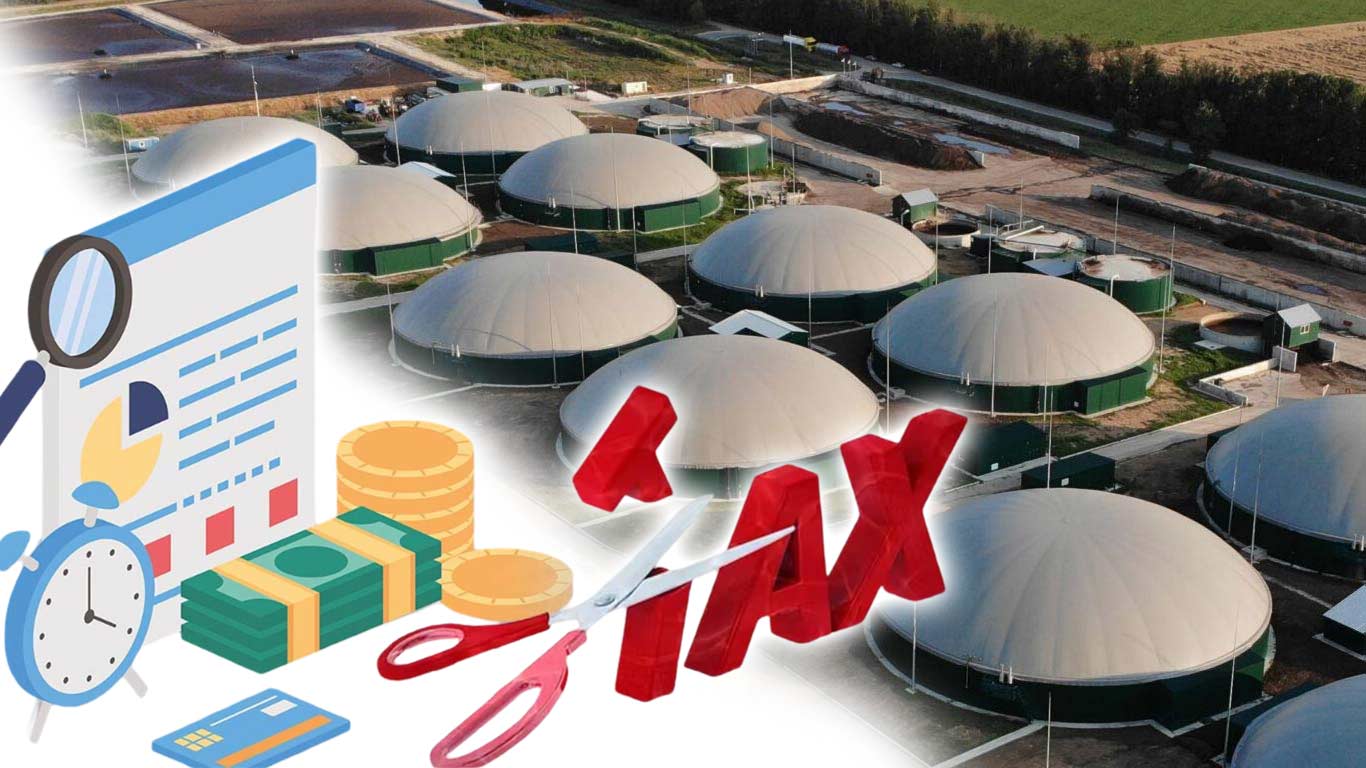
New Delhi, Jul 3 (KNN) Achieving the government's target of 5,000 compressed biogas (CBG) plants producing 15 million metric tonnes annually by 2030 will require a fundamental transition to a market-driven renewable gas economy, underpinned by GST rationalisation, assured offtake mechanisms, and long-term policy support, according to a Confederation of Indian Industry (CII) report released on Friday.
Titled ‘Mainstreaming Compressed Biogas’, the report was released at a CII conference on CBG organised in association with the Petroleum and Natural Gas (PNG) Regulatory Board.
It presents a strategic roadmap for positioning CBG as a mainstream pillar of India's energy security, circular economy, rural development, and decarbonisation agenda.
Policy and Structural Reforms
The CII report recommends rationalising GST to 5 per cent across the entire CBG value chain, including critical equipment, and operationalising Renewable Gas Certificates (RGCs) through transparent pricing and trading mechanisms.
It also calls for permitting private trading of Fermented Organic Manure (FOM/LFOM), mandating fertiliser companies to procure FOM at remunerative prices, expanding city gas distribution and pipeline infrastructure with dedicated CBG injection facilities, and scaling co-location of CBG plants with CNG stations.
The report further advocates strengthening biomass aggregation systems, improving project financing, promoting community-led feedstock mobilisation, and establishing a National Bioenergy Mission to coordinate implementation across ministries and states.
Need for Diversified Offtake
CII said while the recently introduced CBG Blending Obligation establishes a critical minimum assured demand and improves project bankability, long-term sectoral sustainability will require diversified offtake across industrial, transport, commercial, institutional, and city gas distribution sectors.
Integrated Scheme Under Development
Alok Tripathi, Joint Secretary, Ministry of Petroleum and Natural Gas (MoPNG), noted that the ministry was developing an integrated Sampoorn Gobardhan Scheme to address key sectoral challenges relating to assured offtake, pricing certainty, long-term policy visibility, feedstock management, and by-product utilisation.
"We would like to have an offtake assurance mechanism so that whatever CBG is produced is procured. No molecule of CBG should be wasted that should be our intent,” Tripathi said.
CBG Key to Energy and Environmental Goals
Rajesh Verma, Chairperson, Commission for Air Quality Management (CAQM), emphasised that energy security, environmental sustainability, and clean air had become interconnected priorities, describing CBG as a cornerstone for India's self-reliant energy future and circular economy.
Verma added, "India's clean energy transition relies on a multi-pronged approach, with CBG standing out as a vital pillar. CBG is not just an alternative fuel, but a cornerstone for India's self-reliant and secure energy future and for building a circular economy."
CII Director General Chandrajit Banerjee said, "With significant dependence on imported fossil fuel, CBG presents a strategic opportunity to enhance energy security, promote circular economy practices, reduce emissions, improve waste management, and create additional income opportunities for farmers."
(KNN Bureau)







 Loading...


