Electricity Demand Expected To Rise Up to 7.5% In FY27 Amid Higher Heat, Rainfall Deficit: Crisil
Updated: Aug 11, 2026 04:29:36pm

Electricity Demand Expected To Rise Up to 7.5% In FY27 Amid Higher Heat, Rainfall Deficit: Crisil
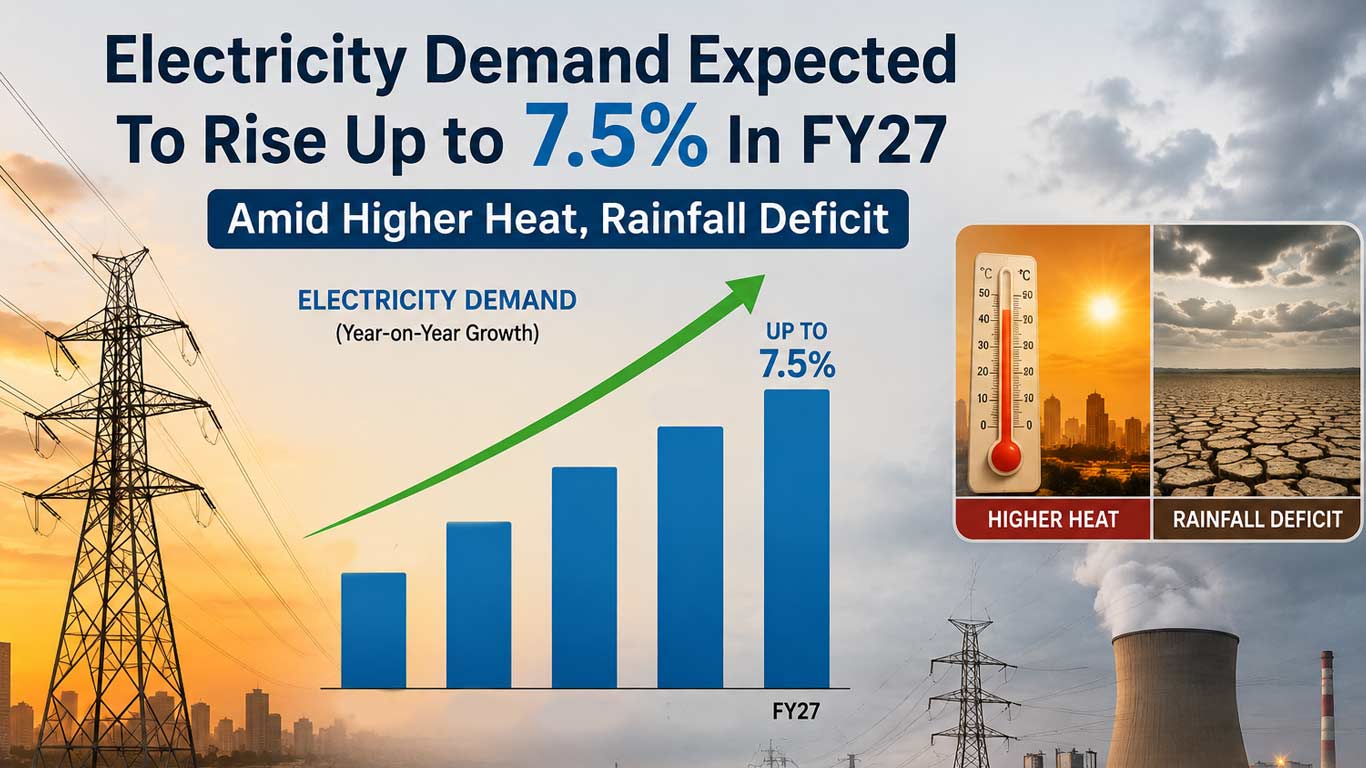
New Delhi, Aug 11 (KNN) India’s electricity demand is expected to increase 6.5-7.5 per cent year-on-year to 1,825-1,835 billion units (BU) in the current fiscal, mainly due to higher cooling requirements amid expectations of elevated temperatures and below-normal rainfall, according to a report by Crisil Intelligence.
Cooling Demand to Drive Consumption
The report said hotter and drier weather could increase the use of air conditioners and other cooling equipment, putting additional pressure on electricity demand. It added that peak power demand and the impact of temperature changes on short-term electricity market prices will remain key factors to monitor, ANI reported.
The impact of weather conditions was already visible in July, when India's power demand rose 10.9 per cent year-on-year to around 171 BU, the highest monthly level on record. This compared with 2.6 per cent growth in July last year.
Rainfall Deficit Raises Power Demand
According to the report, the increase in electricity consumption was driven partly by higher use of cooling equipment amid a rainfall deficit.
Between June 1 and July 29, rainfall was 10 per cent below normal in the northwest, 1 per cent below normal in central India and 26 per cent below normal in southern India. Overall, the country recorded a 15 per cent rainfall deficit during the period.
Power Generation Also Increases
Higher demand was accompanied by increased electricity generation, which rose around 10 per cent year-on-year to 182 BU in July. Most major sources recorded higher generation during the month, except gas and hydropower, the report noted.
Renewable energy generation increased around 10 per cent year-on-year, supported mainly by higher installed capacity. India added 13.2 GW of renewable energy capacity, including small hydro, during the first quarter of the fiscal year.
Hydropower Generation Under Pressure
Weaker rainfall, however, affected hydropower generation, which declined around 14 per cent year-on-year in July. Lower water availability in reservoirs also emerged as a concern, Crisil said.
The energy content of 31 reservoir-based hydropower projects stood at around 14 BU as of July 31, compared with their full-reservoir potential of about 34 BU. At the same time last year, the energy content of these reservoirs was around 22 BU.
Weather Remains Key Risk
The report highlighted that with power consumption expected to remain closely linked to weather conditions, the report said peak demand trends and the sensitivity of short-term electricity prices to temperature changes will be important watchpoints for the power sector during the fiscal year.
(KNN Bureau)











 Loading...