Finance Ministry Weighs Uniform Tax Deferral Rules for Battery Storage Projects
Updated: Nov 16, 2026 03:43:00pm

Finance Ministry Weighs Uniform Tax Deferral Rules for Battery Storage Projects
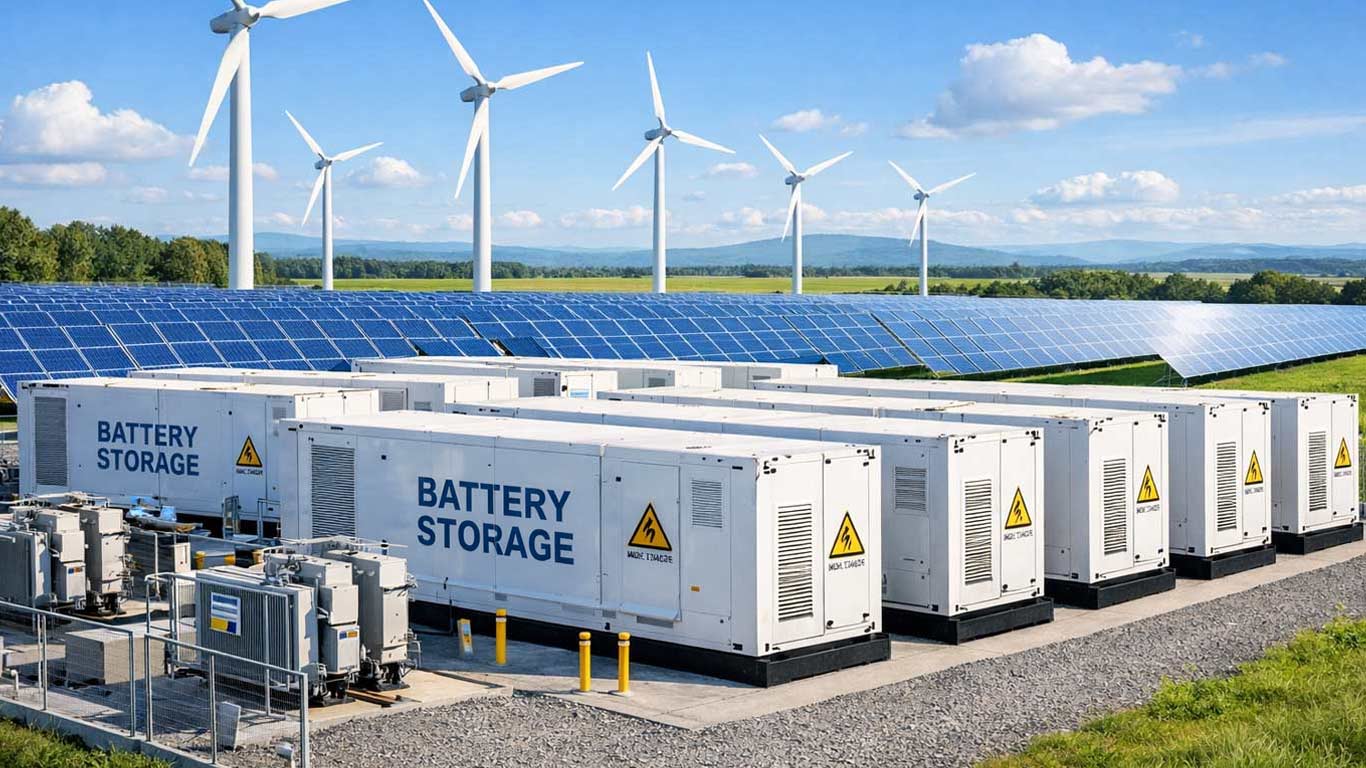
New Delhi, Nov 16 (KNN) The Finance Ministry is considering a uniform approach to allow battery energy storage projects to defer customs duty and GST on imported equipment under the Manufacture and Other Operations in Warehouse Regulations (MOOWR), 2019, following inconsistent decisions by customs authorities across states, according to people familiar with the matter.
The issue centres on whether battery storage qualifies as an 'other operation' under Section 65 of the Customs Act, 1962, which permits manufacturing and other approved operations in bonded warehouses.
While some customs offices have allowed duty deferment, others have rejected applications or kept them pending for months, exposing developers to an additional tax burden of nearly 31 per cent of import value, the Economic Times reported.
The Central Board of Indirect Taxes and Customs (CBIC) is examining the concerns and may amend relevant rules or definitions to ensure uniformity and clarity across jurisdictions.
Tax Uncertainty Raises Project Costs
MOOWR allows companies to defer customs duty and GST on imported equipment stored in approved bonded warehouses and used for permitted operations. The taxes become payable when the equipment is cleared from the warehouse, reducing upfront funding requirements for capital-intensive projects.
Experts estimate that the combined customs duty and GST burden can reach around 31 per cent of import value. Since electricity supply is exempt from GST, developers generally cannot claim input tax credit on GST paid on imported equipment, making it a direct project cost.
EY India Tax Partner Saurabh Agarwal said developers had priced projects based on the existing legal framework, often without provisions for cost escalation. Denial of duty deferment could add around 31 per cent in upfront duty and integrated GST, potentially leading to change-in-law claims that distribution companies (discoms) would ultimately bear.
“A uniform processing of pending applications would remove this uncertainty and would help in aligning its overall objective of the Indian government,” he added, as quoted by ET.
The issue comes amid rising battery costs. Landed battery cell prices in India have reportedly increased from around USD 42 per kilowatt-hour to USD 55 per kilowatt-hour in 2026, driven by higher lithium, copper and aluminium prices and changes in China's export incentives.
(KNN Bureau)








 Loading...