SC Upholds 'Clean Slate' Principle Under IBC, Calls For Stronger Protection Of MSME Creditors
Updated: Jul 20, 2026 04:21:33pm

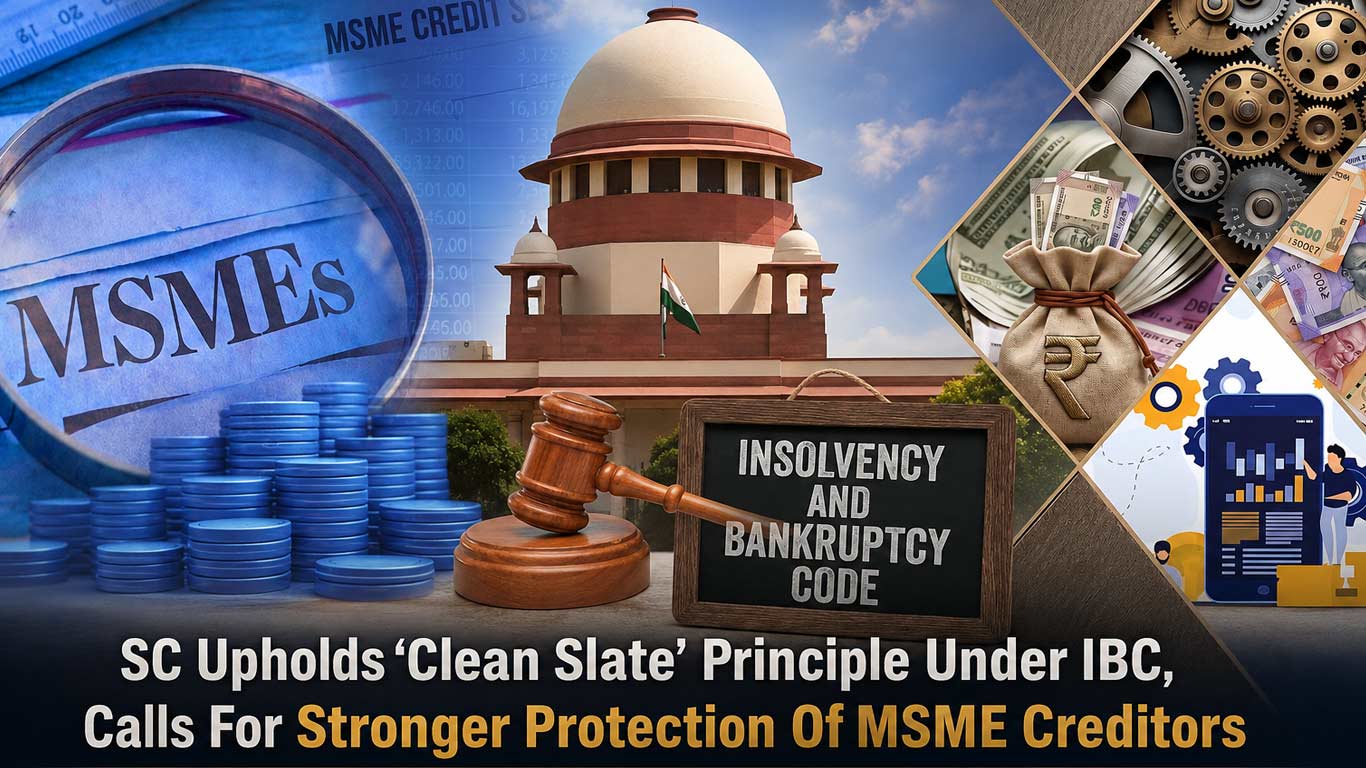
SC Upholds 'Clean Slate' Principle Under IBC, Calls For Stronger Protection Of MSME Creditors
New Delhi, Jul 20 (KNN) The Supreme Court reaffirmed the ‘clean slate’ principle under the Insolvency and Bankruptcy Code (IBC) while urging a review of the law to better protect Micro, Small and Medium Enterprises (MSMEs) and other small operational creditors.
A Bench comprising Justice Manoj Misra and Justice Manmohan held that once a resolution plan is approved under the IBC, all claims not included in the plan stand extinguished. This prevents operational creditors from pursuing civil suits or arbitration for dues that had not been finalised before the plan’s approval.
The judgment came while allowing appeals filed by Tata Steel, overturning a prior decision of the Bombay High Court’s Nagpur Bench that had permitted such proceedings.
Legal Finality After Resolution
The Court clarified that all pending legal proceedings, including civil suits and arbitration cases, which had not resulted in quantifiable claims before the approval of a resolution plan, would stand terminated. This ensures that the successful resolution applicant can take over the corporate debtor without legacy liabilities.
Concerns Over MSMEs and Small Creditors
Despite upholding the existing framework, the Court expressed concern about its impact on smaller operational creditors. It observed that MSMEs and similar entities are placed at the bottom of the repayment hierarchy, leaving them significantly disadvantaged.
The Bench noted that many such entities lack the financial resilience to absorb losses and may be forced into disruptive actions to recover dues.
Call for Legislative Review
Highlighting these concerns, the Court called on the Law Commission and Parliament to examine potential reforms. It suggested that the current repayment structure under the IBC may need adjustments to ensure a more balanced and equitable mechanism, while maintaining the efficiency of the insolvency process.
Background and Outcome
The ruling arose from a dispute over whether operational creditors could continue recovery proceedings after the approval of a resolution plan. The Court settled the issue by emphasising the finality of such plans but simultaneously pointed to the need for policy-level changes.
The appeals were allowed, reinforcing the legal position while opening the door for possible reforms to address the concerns of smaller creditors.
(KNN Bureau)






 Loading...