US Tariff Draws Mixed Response; CITI Raises Alarm, FIEO Sees Limited Impact
Updated: Jul 25, 2026 12:12:51pm

US Tariff Draws Mixed Response; CITI Raises Alarm, FIEO Sees Limited Impact
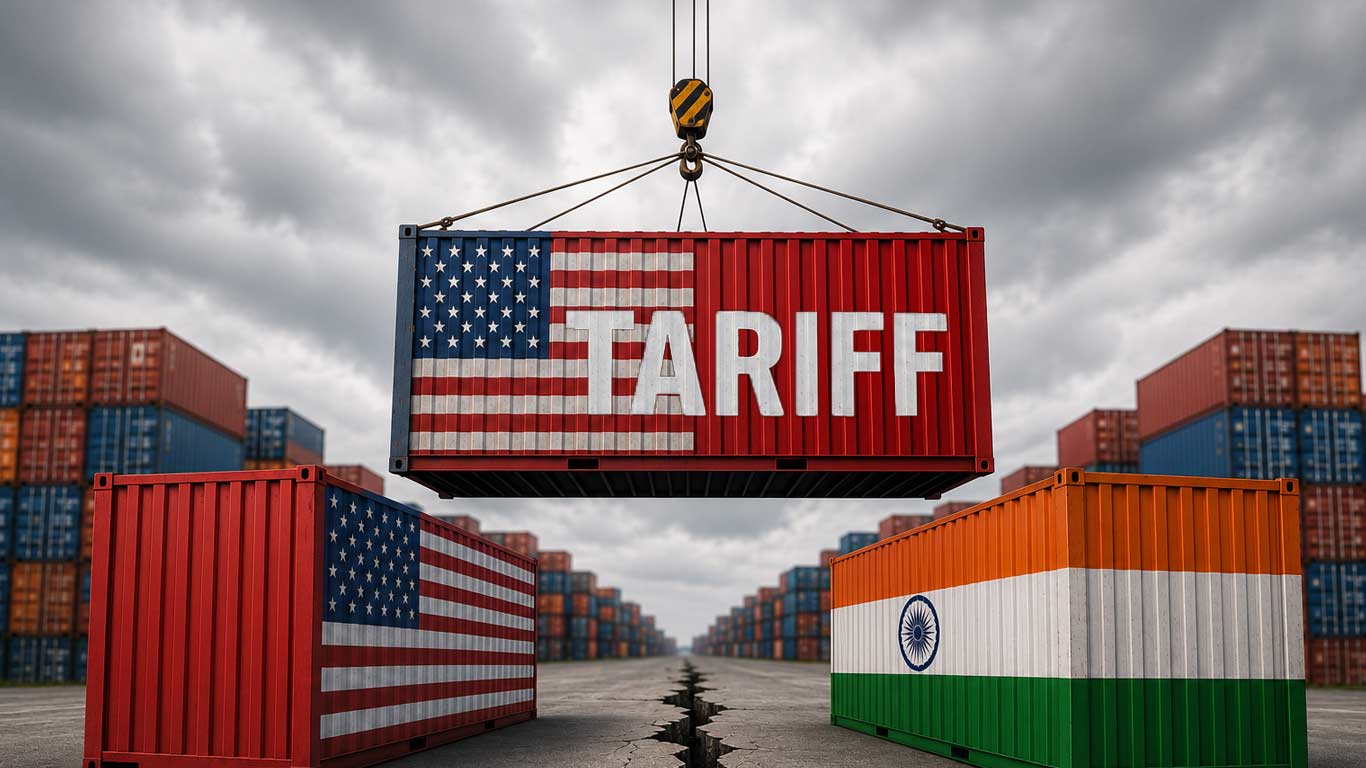
New Delhi, Jul 25 (KNN) The Confederation of Indian Textile Industry (CITI) has expressed concern over the United States' decision to impose an additional 10 percent tariff on Indian goods under Section 301 investigations.
It is related to the enforcement of prohibitions on imports produced using forced labour, warning of its potential impact on India's textile and apparel exports.
CITI Chairman Ashwin Chandran said the tariff, which has no specified expiry date, poses reputational risks and could adversely affect India's textile and apparel exports to the US, the country's largest overseas market for the sector, with annual exports of around USD 11
billion.
Concerns Over Tariff-Rate Quotas For Competing Countries
He also highlighted concerns over the US proposal to establish Tariff-Rate Quotas (TRQs) for Bangladesh, Cambodia, Indonesia and Malaysia, allowing specified textile and apparel imports from these countries to enter the US without Section 301 tariffs if linked to the use of US textile inputs.
According to CITI, this could divert sourcing orders away from India despite competing countries facing similar tariff rates.
The industry body said India has a strong legal and institutional framework prohibiting forced labour, supported by the implementation of four Labour Codes and recent amendments to the Foreign Trade Policy issued by the Directorate General of Foreign Trade (DGFT) to strengthen compliance.
FIEO Sees Limited Competitive Disadvantage
Meanwhile, the Federation of Indian Export Organisations (FIEO) said the overall impact of the additional tariff should be assessed in the context of global competition rather than the headline duty alone.
FIEO President S.C. Ralhan noted that India has been placed in the lower 10 percent tariff category, while several competing exporting nations, including China, Vietnam, Thailand, Türkiye, the UAE, Brazil and South Africa, face a higher tariff of 12.5 percent.
He added that many of India's key competitors in labour-intensive sectors, including Bangladesh, Cambodia, Pakistan, Sri Lanka, Indonesia and Malaysia, are also subject to the same 10 percent
tariff, allowing Indian exporters to retain their relative competitiveness.
Exporters Call For Product-Specific Assessment, Government Engagement
FIEO further said Indian exporters could benefit from trade diversion in product categories where competing countries face higher tariff rates.
It also pointed out that several sectors, including pharmaceuticals, steel, aluminium, auto components and certain agricultural products, remain excluded from the new measure.
The exporters' body urged businesses to undertake product-specific assessments of applicable US tariffs and exclusions while strengthening supply chain compliance, productivity, quality and value addition.
It also called for continued government engagement with the US to secure wider product exclusions, India's inclusion in any textile tariff-rate quota mechanism and an early review of the tariff.
(KNN Bureau)



 Loading...