India Needs Stronger Policy Push to Meet 2030 EV Targets Despite Rapid Sales Growth: BNEF
Updated: Nov 26, 2026 05:01:46pm

India Needs Stronger Policy Push to Meet 2030 EV Targets Despite Rapid Sales Growth: BNEF
New Delhi, Nov 26 (KNN) India is likely to miss its 2030 electric vehicle (EV) adoption targets across all vehicle segments except three-wheelers, despite rapid growth in sales, as stronger policy support and investment will be needed to accelerate electrification, according to a BloombergNEF (BNEF) report.
BNEF's Economic Transition Scenario, which models a shift driven by market forces rather than additional policy interventions, said rising model availability, improving economics and supportive policies were driving adoption.
India's annual EV sales rose 17 per cent to over 2.4 million units in 2025 and reached 2.9 million units in the first 10 months of 2026. Higher fossil fuel prices following the outbreak of the Iran war also supported electric two-wheeler sales.
Passenger and Two-Wheeler Adoption
Passenger EV sales are expected to exceed 305,000 units in 2026, up 42 per cent year-on-year, accounting for 6.7 per cent of passenger vehicle sales. BNEF projects sales to nearly double to 621,000 units by 2030, taking the segment's EV share to 10.2 per cent.
Private buyers are driving passenger EV adoption rather than shared mobility operators, partly due to limited availability of affordable electric cars for fleet operations and competition from compressed natural gas (CNG) vehicles.
Electric two-wheelers accounted for 9.4 per cent of two-wheeler sales during January-October 2026, with annual sales projected to exceed 4.5 million units by 2030. However, scooters are expected to drive adoption, while slower electrification of motorcycles will constrain overall growth.
Commercial Vehicles Lag Behind
Electrification is expected to remain slower in commercial vehicles. EVs are projected to account for just 1.5 per cent of medium and heavy commercial vehicle sales by 2030, although the share could rise to 40.4 per cent by 2040.
Light commercial vehicles are expected to electrify faster, with EVs likely to account for 64 per cent of sales by 2040.
Falling battery prices could improve affordability and accelerate mass-market adoption after 2030. By 2040, annual passenger EV sales could reach nearly 5.2 million units, while electric two-wheeler sales are projected at 13.2 million units.
Charging Infrastructure and Fuel Demand
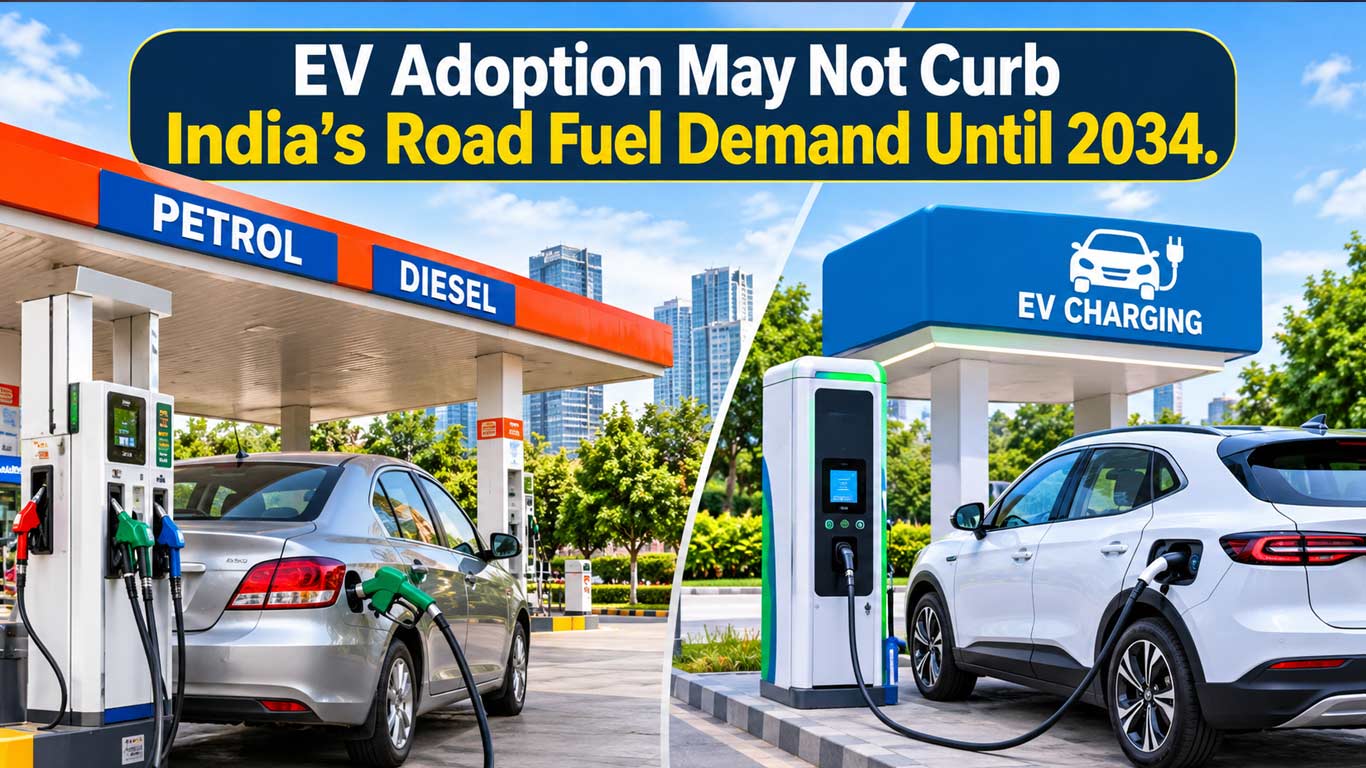
The transition is expected to reshape India's fuel consumption, with road fuel demand projected to peak at over 2.5 million barrels per day in 2034 before declining to just over 2.3 million barrels per day by 2040. Lower consumption by passenger cars and two- and three-wheelers is expected to offset rising oil demand from commercial vehicles.
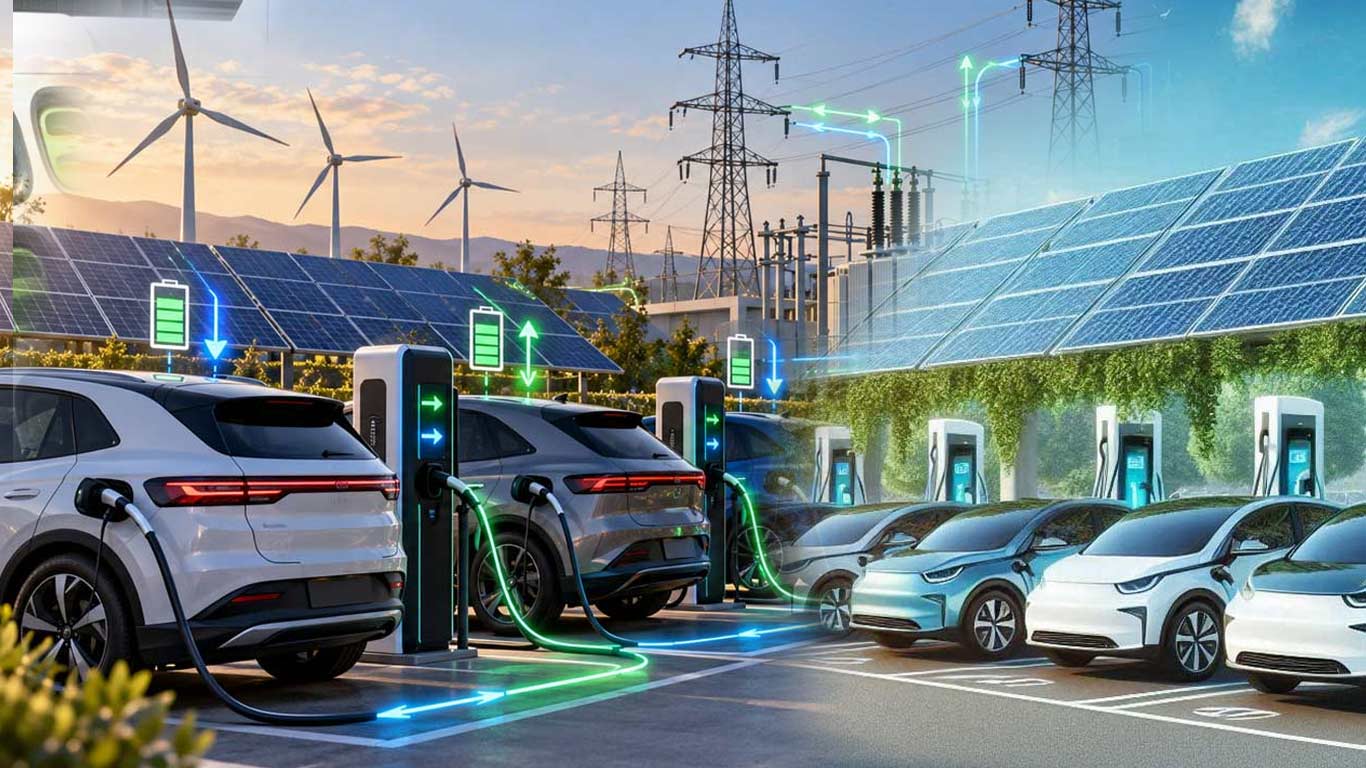
India could require more than 8.7 million EV charging connectors by 2040, involving an estimated investment of USD 29 billion. Electricity demand for EV charging is projected to exceed 96 terawatt-hours, accounting for 6.8 per cent of the country's total electricity demand.
BNEF said affordable models, lower operating costs and improved charging access would support near-term adoption, but stronger policy measures and investment would be necessary to align India's road transport sector with a net-zero pathway by mid-century.
(KNN Bureau)





 Loading...