Draft SHANTI Rules 2026: Govt Proposes New Nuclear Licensing, Liability Framework To Boost Private, Foreign Participation
Updated: Aug 17, 2026 03:46:34pm

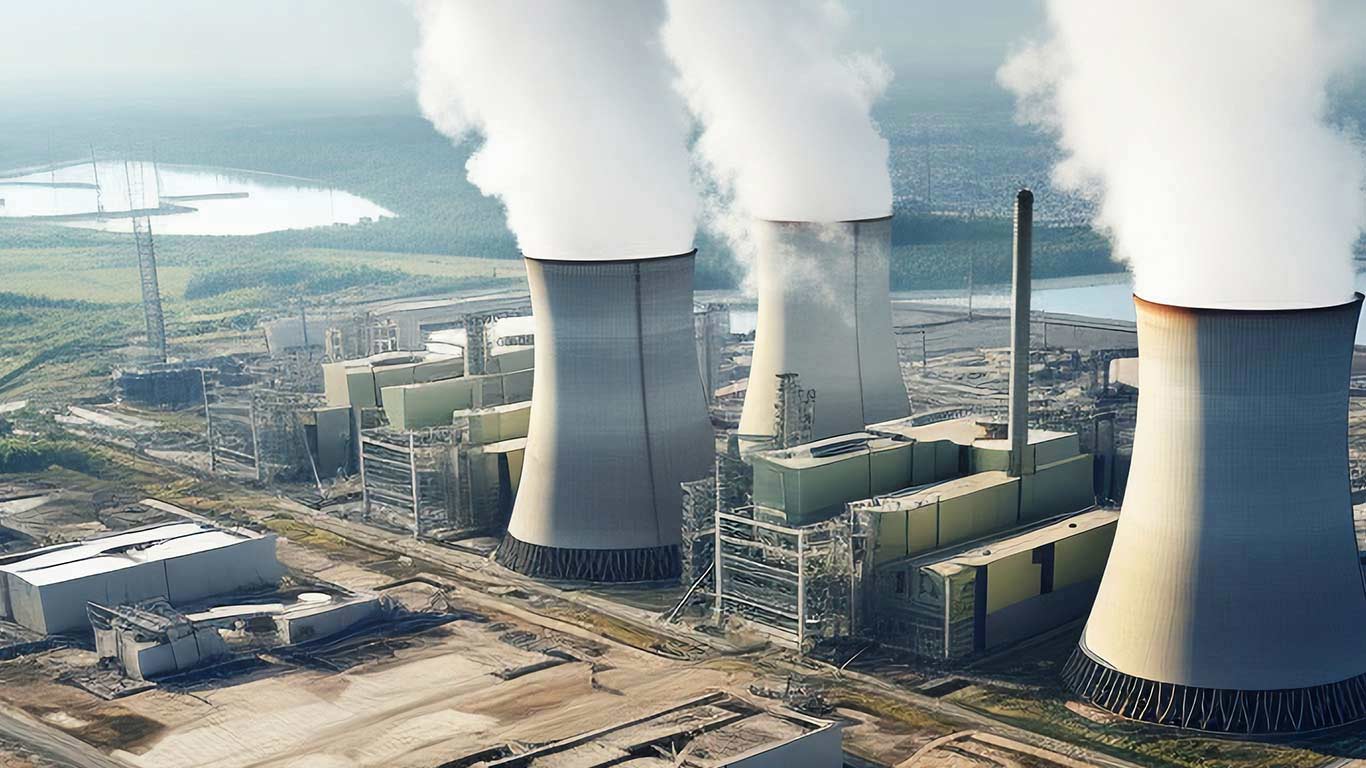
Draft SHANTI Rules 2026: Govt Proposes New Nuclear Licensing, Liability Framework To Boost Private, Foreign Participation
New Delhi, Aug 17 (KNN) The government has released the draft SHANTI Rules and Regulations, 2026, proposing a new framework for licensing, safety, liability and financial protection as India seeks to open its nuclear power sector to greater private and foreign participation.
The draft rules, released by the Department of Atomic Energy for public comments until September 4, provide for a single composite licence covering the construction, ownership, operation and decommissioning of nuclear power plants.
The Sustainable Harnessing and Advancement of Nuclear Energy for Transforming India (SHANTI) Act, enacted in December 2025, replaced the Atomic Energy Act, 1962 and the Civil Liability for Nuclear Damage Act, 2010.
Private Participation, Foreign Technology
The proposed framework allows private entities to apply for nuclear licences, subject to financial, technical and managerial capability requirements. Applicants can also seek in-principle approval before finalising a site or reactor technology, enabling them to engage with technology suppliers and develop supporting infrastructure.
The approval would not constitute a final operating licence and could be revoked on grounds including public interest, national security, public health and safety, or suppression of material information.
Foreign reactor designs would be permitted only if they have been approved or certified by the regulatory authority in their country of origin and are operational in that country or another foreign jurisdiction.
The draft defines a country of origin as one with a self-reliant nuclear reactor design and supply-chain ecosystem and regulatory approvals that are globally trusted. Imported or domestically acquired technology must also not adversely affect India's interests.
Mandatory Financial Protection
The proposed rules require nuclear operators to maintain insurance, financial security or a combination of both against potential nuclear damage.
The financial protection would remain in force through the lifecycle of the facility, including until spent fuel is removed from the relevant spent-fuel storage pool. Operators would also have to make financial arrangements for spent fuel and radioactive waste management, decommissioning, site remediation and other civil liabilities.
Where shares, bonds or other financial instruments are used as security, they would have to be pledged to the Central Government, with a security margin of 1:1.33. Any shortfall would have to be covered immediately through additional insurance or financial security.
The rules also propose a Nuclear Liability Fund financed through a levy on nuclear operators.
Wider Applications for Nuclear Power
The proposed licensing framework extends beyond conventional electricity generation. It covers captive power, process heat, hydrogen production, medical isotope production, education, training and research.
Nuclear captive power is also proposed for energy-intensive and hard-to-abate industries, as well as emerging sectors such as data centres, semiconductor manufacturing, quantum technologies, high-performance computing and AI-related applications.
Central Government-owned nuclear installations would have a separate liability framework. In specified cases, such operators would not be required to maintain insurance or other financial security, with the Central Government assuming liability for damages attributable to the operator.
Stricter Safety Authorisation
Licensees would require design approval and safety authorisation from the Atomic Energy Regulatory Board (AERB) for different stages, including site selection, construction, commissioning, operation and decommissioning.
The draft regulations provide for safety assessments covering plant design, accident analysis, safety systems, site characteristics, radiological impact, emergency preparedness, radioactive waste management and security.
Before receiving operating authorisation, operators would need to submit commissioning results, safety reports, technical specifications, radiation protection and emergency plans, along with waste-management authorisation.
Liability Limits to Be Reviewed
The government has proposed reviewing the maximum limits of civil liability for nuclear damage every five years. An expert group comprising specialists in nuclear science and engineering, actuarial science, insurance and law, along with public-interest representatives, would examine the limits and recommend changes where necessary.
Uranium and thorium mining would remain restricted, with mining above government-notified thresholds limited to state entities nominated under existing rules.
India aims to expand nuclear capacity to 100 GW by 2047 from around 8.8 GW currently, with an intermediate target of about 22 GW by 2031-32.
(KNN Bureau)







 Loading...