Funding Constraints, Supply Risks Cloud India’s Critical Mineral Ambitions: IEEFA-CSI
Updated: May 12, 2026 02:51:43pm

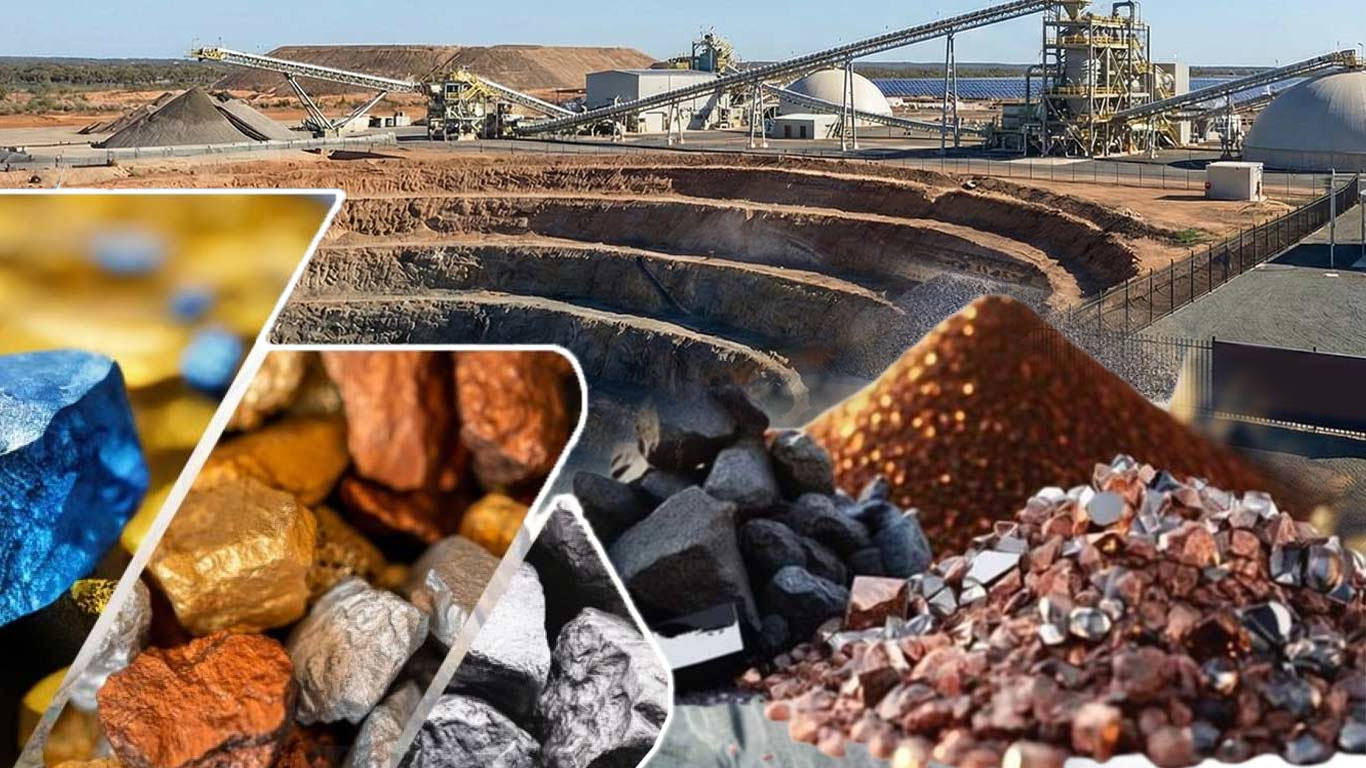
Funding Constraints, Supply Risks Cloud India’s Critical Mineral Ambitions: IEEFA-CSI
New Delhi, May 12 (KNN) As the global energy transition gathers pace, financing constraints in securing critical minerals are emerging as a major challenge for India’s clean energy ambitions, according to a joint report by the Institute for Energy Economics and Financial Analysis (IEEFA) and Climate and Sustainability Initiative (CSI).
Funding Gaps Threaten Critical Mineral Expansion
The report said rising demand for critical minerals will require major global investment, with the International Energy Agency estimating nearly USD 915 billion in fresh capital for mining and refining between 2026 and 2035, exceeding current commitments and raising the risk of supply shortages by 2040.
It added that India faces funding gaps across the value chain, from exploration to refining, as investment needs are front-loaded and long-term returns remain uncertain, underscoring the need for de-risking measures and greater private sector participation.
“The absence of risk-sharing capital, midstream capex support, and integration with manufacturing incentives is limiting private investment,” said Saloni Sachdeva Michael, Lead Energy Specialist, India Clean Energy Transition at IEEFA.
Supply Chain Risks And Weak Processing Capacity Persist
The note identified high upfront costs, long project timelines and regulatory uncertainties as key deterrents for investors. It added that feedstock uncertainty, price volatility and global overcapacity in refining are further discouraging investments in midstream processing facilities.
Kaira Rakheja, Energy Analyst, IEEFA, said these bottlenecks continue to undermine investor confidence in the sector. The report added that India’s critical minerals strategy will also depend on expanding domestic manufacturing in batteries, electric vehicles, solar modules and electronics, key drivers of mineral demand.
“The high concentration of critical mineral supply chains in a few countries, primarily China, means that India needs to diversify its sources and augment its domestic manufacturing capabilities,” said Rati Verma, Research Consultant, CSI.
The report said India lacks a clear roadmap for domestic refining and processing, with limited clarity on financing, facility locations and integration with mining operations.
It also flagged weak coordination among academia, public sector firms and private players in R&D. While the National Critical Mineral Mission addresses upstream risks through exploration, overseas acquisitions and recycling, its alignment with Production Linked Incentive schemes remains weak.
The report called for stronger Centre-state coordination through clearer roles, aligned incentives and shared project pipelines.
Global Partnerships Key To Securing Mineral Supplies
On the global front, India is seeking to secure critical minerals through strategic partnerships, with Khanij Bidesh India Limited pursuing overseas exploration and acquisitions, particularly for lithium and cobalt.
The report also called for stronger ESG practices to address risks linked to emissions, corruption and geopolitical conflicts, warning that without sustained policy support, underinvestment could undermine India’s clean energy transition.
“Global experience shows that Centre-state coordination, risk-sharing, and long-term policy clarity are essential for the sector’s progress,” said Labanya Prakash Jena, Director, CSI.
(KNN Bureau)





 Loading...