Govt Expands International Partnerships For Renewable Energy & Grid Integration
Updated: Feb 03, 2026 05:17:05pm

Govt Expands International Partnerships For Renewable Energy & Grid Integration
New Delhi, Feb 3 (KNN) The government is strengthening international cooperation to advance renewable energy deployment, energy storage and grid integration, said Union Minister of State for New and Renewable Energy Shripad Yesso Naik in Rajya Sabha.
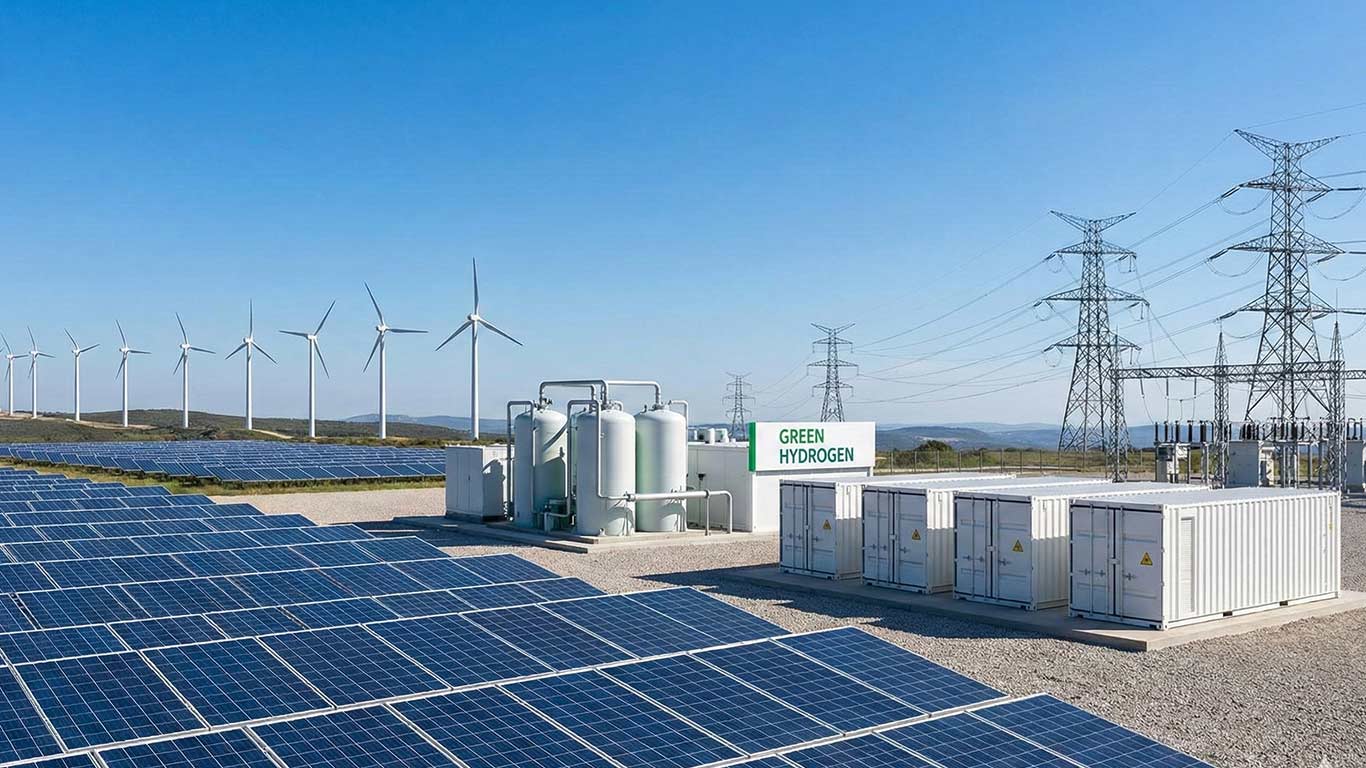
In written reply to a question, he said that Ministry of New and Renewable Energy (MNRE) is collaborating with several countries and international organisations in areas including solar and wind energy, green hydrogen, energy storage and grid integration.
These collaborations, the Minister said, are pursued through mechanisms such as Memorandums of Understanding, Letters of Intent, Joint Declarations of Intent, energy dialogues and strategic partnerships.
Areas of cooperation include policy exchange, capacity building, personnel training, joint research and technical projects, and organisation of workshops and expert working groups, with engagement spanning both foreign governments and private industry.
MNRE and its affiliated institutions have entered into collaborative arrangements with a wide range of countries and multilateral platforms, including Australia, Bangladesh, Brazil, Canada, Denmark, France, Germany, Japan, the Netherlands, Saudi Arabia, the United Kingdom, the United States, the United Arab Emirates, and the International Renewable Energy Agency (IRENA), among others.
The government has also undertaken multiple reforms to modernise renewable energy legislation, services and sectoral governance.
Key measures include issuing a bidding trajectory of 50 GW of renewable energy capacity per year through Renewable Energy Implementing Agencies from FY 2023–24 to FY 2027–28, permitting up to 100 per cent foreign direct investment under the automatic route, and waiving inter-state transmission system charges for renewable energy projects.
Additional reforms include notification of renewable consumption obligation targets up to 2029–30, issuance of standard bidding guidelines for tariff-based procurement of solar, wind, hybrid and firm and dispatchable renewable energy projects, and implementation of schemes for solar parks and ultra-mega solar power projects to facilitate land and transmission access.
Transmission infrastructure expansion is being supported under the Green Energy Corridor Scheme.
Regulatory measures such as net metering provisions under the Electricity (Rights of Consumers) Rules, repowering and life-extension policy for wind projects, offshore wind energy lease rules, quality assurance through standard and labelling programmes, and enforcement of payment security mechanisms for renewable power generators have also been implemented.
The government has further emphasised digitalisation and green innovation across renewable energy programmes. Digital application and project monitoring platforms have been adopted under schemes such as PM Surya Ghar: Muft Bijli Yojana and PM-KUSUM, alongside the use of advanced resource assessment, geospatial mapping and digital tools to improve project planning, transparency and long-term sustainability.
(KNN Bureau)







 Loading...