India Needs 60.63 GW Of Energy Storage Capacity By 2030: CEA Report
Updated: Feb 03, 2026 05:17:58pm

India Needs 60.63 GW Of Energy Storage Capacity By 2030: CEA Report
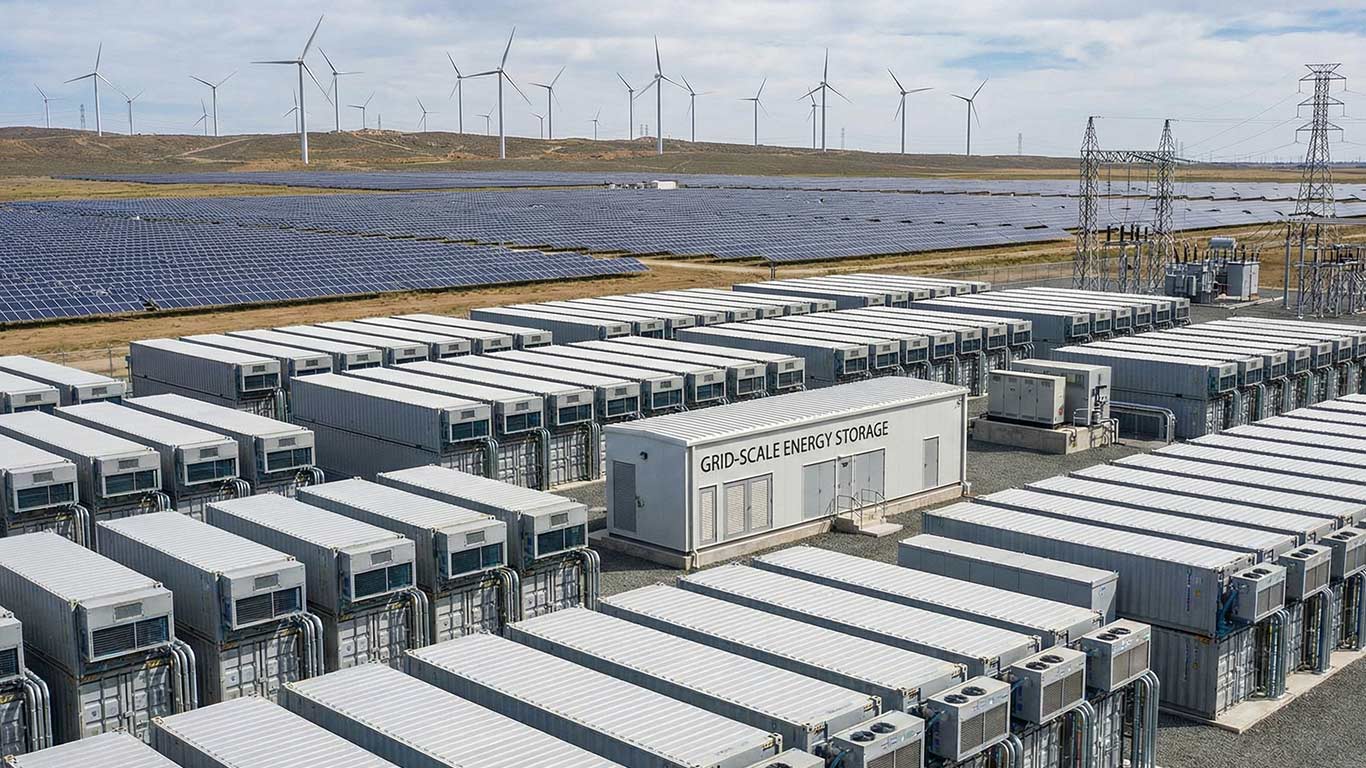
New Delhi, Feb 3 (KNN) India will need 60.63 GW of energy storage by 2029–30, including 18.98 GW from Pumped Storage Projects (PSPs) and 41.65 GW from Battery Energy Storage Systems (BESS), as per a Central Electricity Authority (CEA) report.
Policy Support and Incentives
Minister of State for New and Renewable Energy Shripad Yesso Naik, in a written reply in the Rajya Sabha on Tuesday, said that to meet this requirement, the government has introduced several policy and financial measures.
These include guidelines for procurement and use of BESS across generation, transmission and distribution, a national framework to promote energy storage systems, and separate guidelines to encourage PSP development.
The government has also granted a 100 per cent waiver on inter-state transmission system (ISTS) charges for PSPs awarded by June 30, 2028, and for certain co-located BESS projects commissioned by the same date.
Funding for Battery Storage
Naik highlighted that in March 2024, the government approved a viability gap funding (VGF) scheme with an outlay of Rs 3,760 crore to support 13,220 MWh of large-scale battery energy storage systems (BESS).
This was followed by another VGF scheme in June 2025 for 30 GWh of storage capacity, backed by Rs 5,400 crore from the Power System Development Fund.
In addition, 10 GWh has been earmarked for grid-scale stationary storage under the National Programme on Advanced Chemistry Cell (ACC) Battery Storage.
Shift in Renewable Procurement
As of December 31, 2025, renewable energy implementing agencies (REIAs) such as SECI, NTPC, NHPC and SJVN have issued letters of award for about 69 GW of capacity, with power purchase agreements signed for around 24.3 GW.
Renewable capacity addition is also progressing through state tenders and commercial and industrial consumers via open access and captive routes.
With falling costs of renewable power combined with storage, distribution companies and large consumers are increasingly favouring solar and wind projects with storage or firm and dispatchable renewable energy (FDRE) configurations.
In response, the government has advised REIAs to move away from plain renewable tenders and focus on storage-linked and peak power supply tenders.
Steps to Speed Up PPAs
To accelerate signing of Power Purchase Agreements (PPAs), the government has urged states to comply with renewable consumption obligations and encouraged REIAs to aggregate demand before issuing bids.
Regional workshops have also been held with key states to address implementation challenges and support faster execution of renewable and storage projects.
(KNN Bureau)








 Loading...


