India To Add 8,500 MWh Battery Storage Capacity By End Of 2027: CEA
Updated: Jul 10, 2025 03:15:51pm


India To Add 8,500 MWh Battery Storage Capacity By End Of 2027: CEA
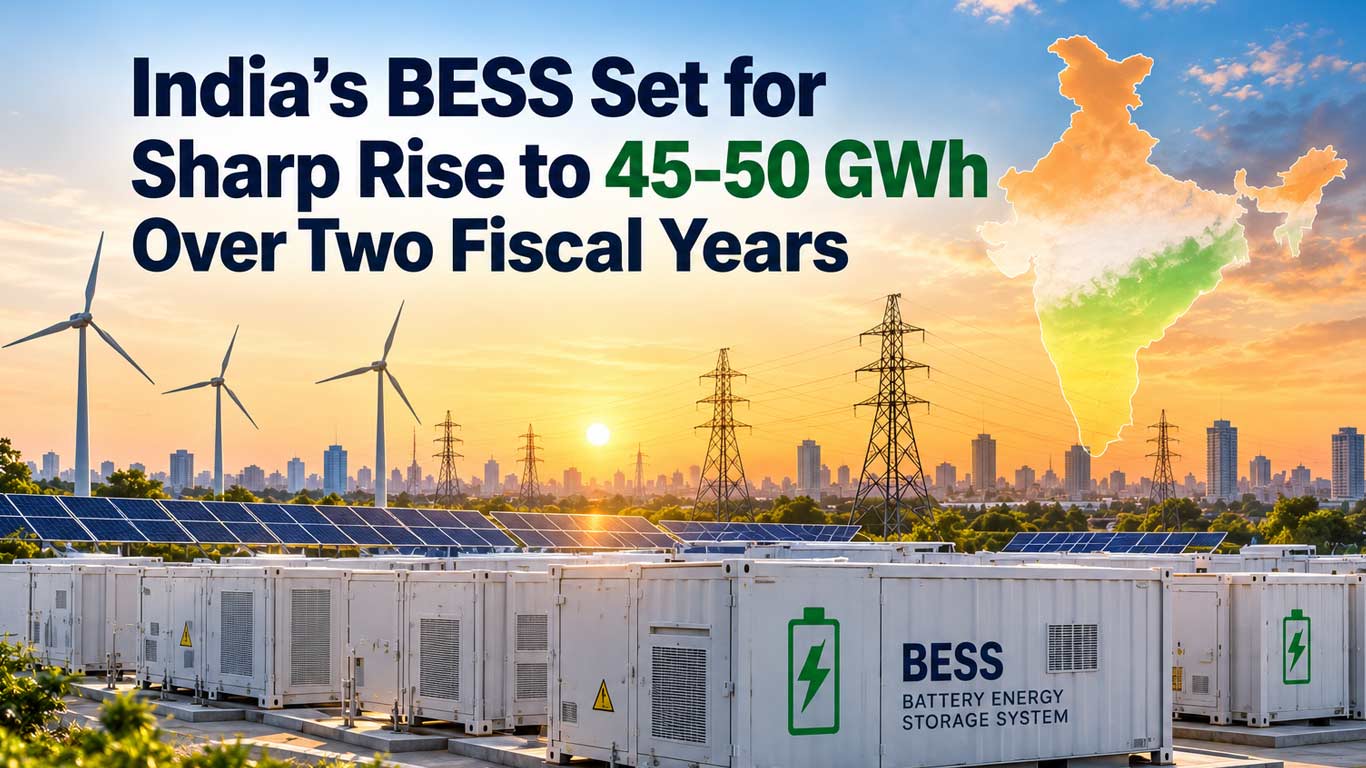
New Delhi, July 10 (KNN) India is set to add 8,500 megawatt hours (MWh) of battery energy storage capacity by the end of 2027, with plans to scale up to 74,000 MWh by 2031–32, Central Electricity Authority (CEA) Chairperson Ghanshyam Prasad announced on July 9.
"Currently, India's commissioned battery energy storage capacity is meagre at 506 MWh. But, the good thing is that we have a solid number of projects under pipeline and in the tendering stage," Prasad said at the India Energy Storage Week organised by India Energy Storage Alliance (IESA) in New Delhi.
One of the key challenges with renewable energy is its intermittency. Unlike thermal and other conventional power generation sources, renewables often produce an inconsistent output—solar power, for instance, cannot be generated at night, while wind power depends heavily on weather conditions.
"At least 8,500 MWh capacity is under pipeline which is expected to be operationalised in the next 2 years. Further, 42,000 MWh is under tendering stage. We may not feel the necessity of energy storage now, but from 2026-27, battery energy storage systems will be needed in a phased manner as the ongoing renewable energy projects will be ready by then," he added.
To address this intermittency and ensure round-the-clock clean power, the Indian government is also diversifying its storage mix by scaling up pumped hydro energy storage (PHES) projects.
This year alone, the government is set to commission 3,000 MW of pumped storage capacity, with some units at Tehri (Uttarakhand) and Pinnapuram (Andhra Pradesh) already operational.
Prasad outlined an ambitious plan to expand India’s pumped hydro capacity from the current 5 GW to over 50 GW by 2031–32.
"What is important is raising the capacity of pumped hydro storage plants from 5 GW at present to 50 GW or more by 2031-32. The CEA last year approved 7.5 GW capacity and this year it is targeting to clear somewhere around 25 GW of pumped storage capacity, which means these projects will get commissioned in another 4 years or by 2029-30," Prasad said.
Pumped storage systems function like large-scale batteries, using two water reservoirs at different elevations. Water is pumped to the upper reservoir during periods of low electricity demand and released through turbines to the lower reservoir when demand spikes, generating power as needed.
The combined deployment of battery-based and pumped hydro storage technologies is seen as essential to India’s broader energy transition strategy, enabling renewables to replace fossil fuels without compromising grid reliability or energy security.
(KNN Bureau)






 Loading...