India’s Non-Fossil Power Capacity Crosses 262.74 GW, Tops 51% of Total Installed Capacity
Updated: Dec 18, 2025 03:32:06pm


India’s Non-Fossil Power Capacity Crosses 262.74 GW, Tops 51% of Total Installed Capacity
New Delhi, Dec 18 (KNN) India’s non-fossil fuel-based installed electricity capacity has crossed 262.74 GW as of November, 2025, accounting for over 51 percent of the country’s total installed power capacity, the government informed Parliament.
This information was provided by the Minister of State for New and Renewable Energy and Power, Shripad Yesso Naik, in a written reply to a Lok Sabha Question.
Policy and Regulatory Measures
The government has issued standard bidding guidelines for solar, wind, hybrid and FDRE projects, allowed 100% foreign direct investment via the automatic route, and strengthened Renewable Purchase Obligation by transitioning it into a Renewable Consumption Obligation with penalties for non-compliance.
Key Schemes and Initiatives
Several flagship schemes have been launched to expand renewable capacity, including PM-KUSUM, PM Surya Ghar Muft Bijli Yojana, the National Programme on High Efficiency Solar PV Modules.
Special programmes are also being implemented for tribal and PVTG habitations under Pradhan Mantri Janjati Adivasi Nyaya Maha Abhiyan and Dharti Aabha Janjatiya Gram Utkarsh Abhiyan.
The Solar Parks and Ultra Mega Solar Power Projects scheme is being implemented to provide land and transmission infrastructure to developers for large-scale installations.
Transmission and Market Reforms
The Green Energy Corridor is funding new transmission lines, Inter-State Transmission System waivers have been extended for renewables and green hydrogen, and market tools like Green Term Ahead Market and open access rules aim to boost affordable green power access.
Quality, Storage and Wind Sector Reforms
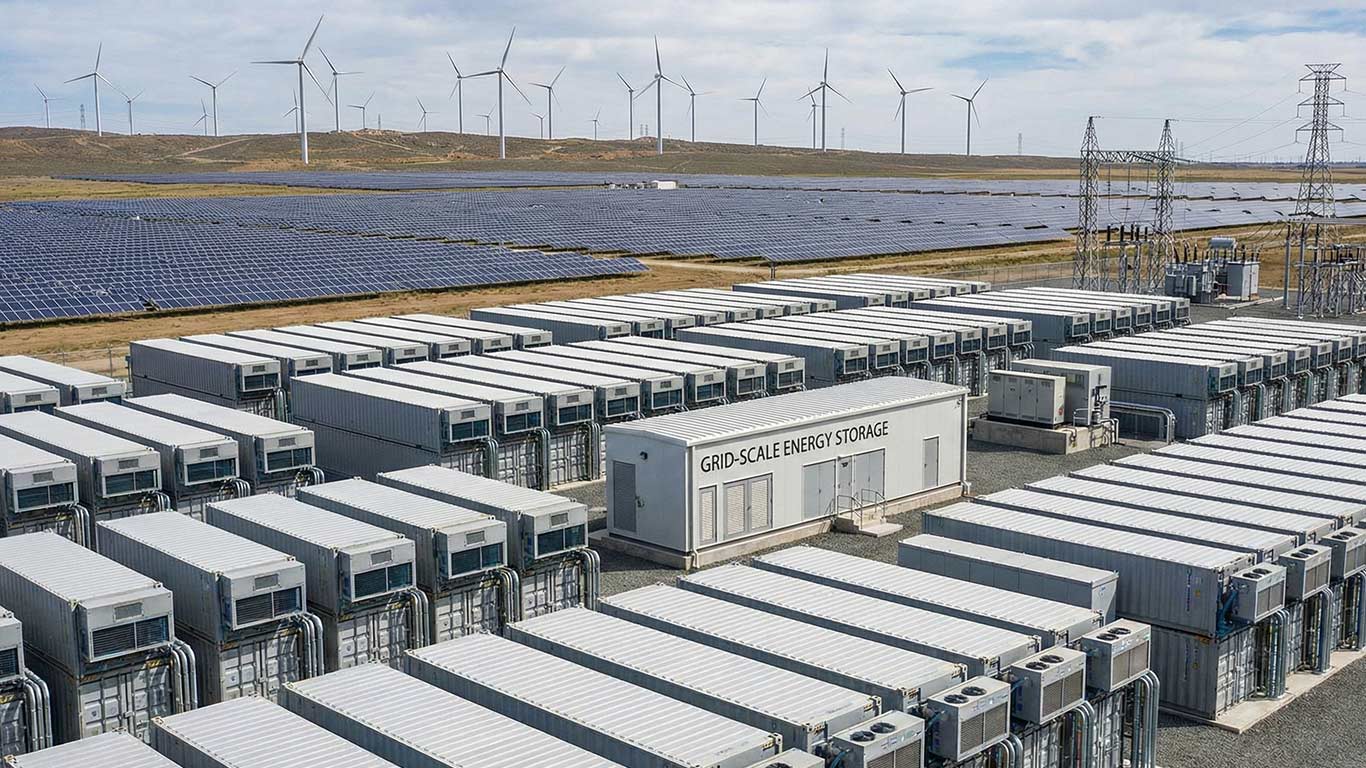
Quality Control Orders now cover solar PV modules, inverters, storage batteries and solar water heaters, alongside a National Energy Storage Framework and resource adequacy guidelines.
In wind power, measures include the 2023 repowering policy, revised prototype turbine norms, and a shift from RLMM to ALMM with stricter localisation requirements.
(KNN Bureau)







 Loading...