Petroleum Ministry Lists Out Achievements In 2025, Highlights Expansion In LPG Connections
Updated: Dec 26, 2025 04:17:54pm

Petroleum Ministry Lists Out Achievements In 2025, Highlights Expansion In LPG Connections
New Delhi, Dec 26 (KNN) The Ministry of Petroleum & Natural Gas recorded significant progress in 2025 across energy access, infrastructure development, cleaner fuels and upstream reforms, aligned with national priorities of energy access, efficiency, sustainability and security.
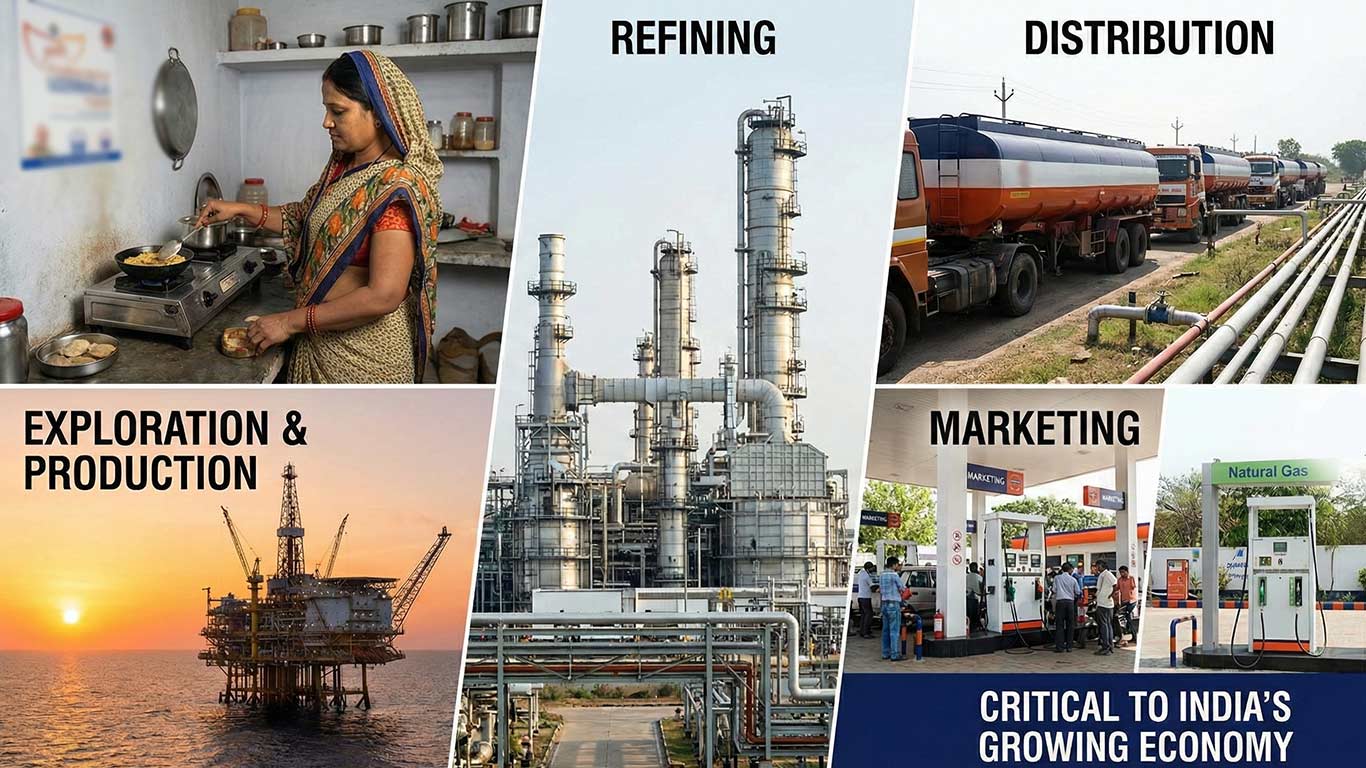
The Ministry oversees exploration and production, refining, distribution and marketing of petroleum and natural gas, which remain critical to India’s growing economy.
Universal access to clean cooking fuel remained a key focus under the Pradhan Mantri Ujjwala Yojana (PMUY). The number of beneficiaries reached about 10.35 crore as of 1 December 2025, Petroleum Ministry said in a year-end review on Friday.
To achieve saturation in access, the Government approved 25 lakh additional LPG connections for FY 2025–26. The eligibility process was simplified through a single Deprivation Declaration, replacing the earlier multi-point system.
LPG affordability was supported through a targeted subsidy of Rs300 per cylinder for up to nine refills annually for PMUY beneficiaries, contributing to a steady rise in consumption levels.
Efforts to improve transparency and targeting included accelerated biometric Aadhaar authentication, covering 71 percent of PMUY consumers and 62 percent of non-PMUY consumers by December 2025.
A nationwide drive launched in November enabled free, mobile-based authentication. Consumer safety was strengthened through the Basic Safety Check campaign, under which more than 12.12 crore inspections were conducted and over 4.65 crore LPG hoses were replaced at subsidised rates.
Petroleum marketing infrastructure saw continued expansion during the year. As per the official data, over 90,000 retail outlets were enabled with digital payments, supported by 2.71 lakh POS terminals, while more than 3,200 bowsers were commissioned to improve fuel delivery in remote areas.
The Petroleum Ministry said that nearly all retail outlets were equipped with toilet facilities under the Swachh Bharat Mission. Electric mobility infrastructure also expanded, with 8,932 EV charging stations installed under FAME-II and over 18,500 additional chargers set up by oil marketing companies.
The APNA GHAR initiative progressed with over 500 wayside amenities for truckers.
Public sector oil marketing companies continued developing integrated Energy Stations offering conventional fuels alongside CNG, LNG, biofuels and EV charging. As of November 2025, 1,064 such stations had been commissioned out of a planned 4,000 between 2024–25 and 2028–29.
Significant gains were made in expanding the gas-based economy. Operational natural gas pipelines increased to 25,429 km by June 2025, with an additional 10,459 km under execution, supporting the vision of a fully connected national gas grid.
The Unified Pipeline Tariff regime under the “One Nation, One Grid, One Tariff” mission covered about 90 percent of operational pipelines, improving affordability and competitiveness.
City Gas Distribution expanded to 307 geographical areas, with PNG connections reaching about 1.57 crore and CNG stations exceeding 8,400.
Under the SATAT initiative, more than 130 Compressed Bio Gas plants were commissioned by November 2025. Mandatory CBG blending in CNG and PNG commenced from FY 2025–26.
Biofuel initiatives advanced with ethanol blending in petrol averaging 19.24 percent in ESY 2024–25, generating significant foreign exchange savings and emission reductions. Second-generation ethanol plants at Panipat and Numaligarh marked key milestones under the JI-VAN Yojana.
Sustainable Aviation Fuel initiatives progressed with indicative blending targets announced for international flights from 2027 onwards. Indian Oil Corporation became the first Indian company to receive ISCC CORSIA certification for SAF production, followed by an MoU with Air India for supply. Biodiesel blending also expanded with diversified feedstocks.
The upstream sector underwent major reforms with the Oilfields (Regulation and Development) Amendment Act, 2025 and notification of the Petroleum and Natural Gas Rules, 2025.
Under the Hydrocarbon Exploration Licensing Policy, 172 blocks were awarded, attracting committed investments of about USD 4.36 billion. Strategic petroleum reserves were strengthened through progress on Phase-II facilities and overseas investments by Indian PSUs.
Overall, the Ministry’s initiatives during 2025 reflected sustained efforts to strengthen energy access, affordability, sustainability and security, supporting India’s transition towards a resilient and inclusive energy future.
(KKN Bureau)




 Loading...