Govt Allows FDI In Inventory-Based E-Commerce For Exports Only
Updated: Jul 24, 2026 03:23:06pm

Govt Allows FDI In Inventory-Based E-Commerce For Exports Only
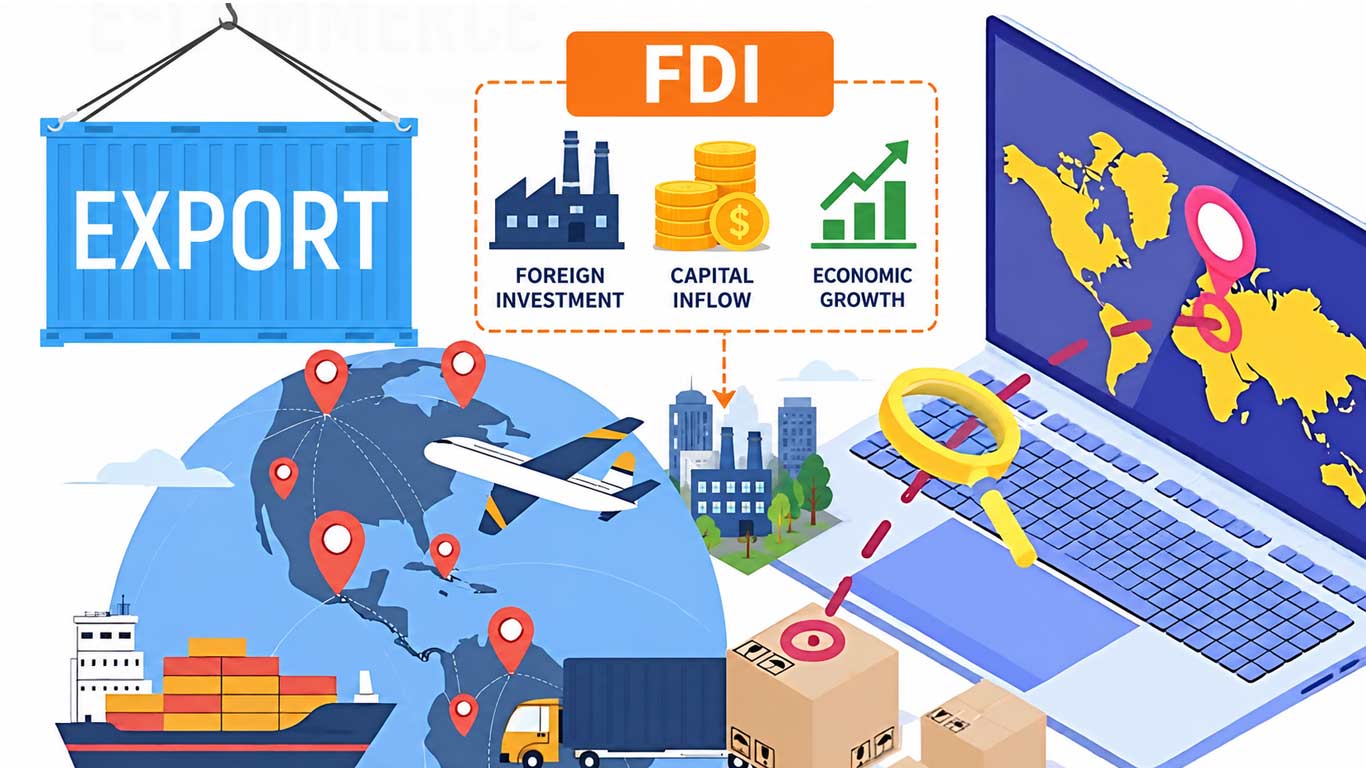
New Delhi, Jul 24 (KNN) The government on Thursday permitted foreign direct investment (FDI) in inventory-based e-commerce models exclusively for exports, in a move aimed at boosting outbound shipments while maintaining safeguards for domestic retail.
In a press note, the Department for Promotion of Industry and Internal Trade (DPIIT) said the existing FDI policy has been revised to remove restrictions on inventory-based e-commerce for exports of goods manufactured or produced in India. The change is intended to provide Indian sellers easier access to global markets.
Existing Rules
Under the current framework, FDI is permitted in business-to-business (B2B) e-commerce and marketplace models. However, it is not allowed in business-to-consumer (B2C) e-commerce or inventory-based models, where the e-commerce entity owns and directly sells goods to consumers.
New Provisions to Promote Exports
The updated framework allows e-commerce entities to own inventory and directly export Indian-made goods in accordance with the Foreign Trade Policy 2023 and applicable foreign exchange regulations. The relaxation applies exclusively to export activities, with existing restrictions continuing for domestic trade.
Under the revised policy, e-commerce entities can adopt an inventory-based model solely for exporting domestically produced goods. The government clarified that restrictions on B2C and inventory-based e-commerce will remain in place for domestic operations, ensuring that local retailers are not adversely affected.
The policy aims to support India’s export promotion objectives while preserving safeguards for domestic retail. It is also expected to reduce regulatory uncertainty and enhance policy predictability for foreign investors.
The provision will come into effect upon notification under the Foreign Exchange Management Act (FEMA).
Industry Impact and Expert Views
Sunil Kumar, Partner, Tax and Regulatory Services, EY India, said, “The inventory-based e-commerce restriction was originally introduced to regulate domestic retail trading. However, questions had arisen on whether the same restrictions should extend to marketplace models facilitating export. By clarifying the position, the government has removed uncertainty, reinforced policy predictability for foreign investors, and aligned the FDI framework with India’s broader export promotion agenda, while preserving the safeguards applicable to domestic e-commerce,” as quoted by Business Standard.
According to the Global Trade Research Initiative (GTRI), the decision could benefit large global e-commerce firms and may signal a broader shift in India’s online retail policy.
GTRI founder Ajay Srivastava said the move marks a significant relaxation of long-standing restrictions, allowing foreign-funded platforms to purchase, store and export goods directly—something previously not permitted under the marketplace-only model.
Srivastava noted, “The Indian government has proposed a major relaxation of its long-standing restrictions on foreign investment in e-commerce, a move that is expected to benefit large American companies such as Amazon and could pave the way for a wider opening of India's online retail sector,” as quoted by PTI.
“India has maintained this distinction for nearly a decade. Under the marketplace model, the platform acts only as a digital intermediary, earning commissions while independent sellers own the goods,” he added.
(KNN Bureau)









 Loading...


