Govt Partners With ADB to Develop Warehouse, Cold Chain Grading and Rating Framework: DPIIT Joint Secretary
Updated: Sep 30, 2026 04:48:23pm

Govt Partners With ADB to Develop Warehouse, Cold Chain Grading and Rating Framework: DPIIT Joint Secretary
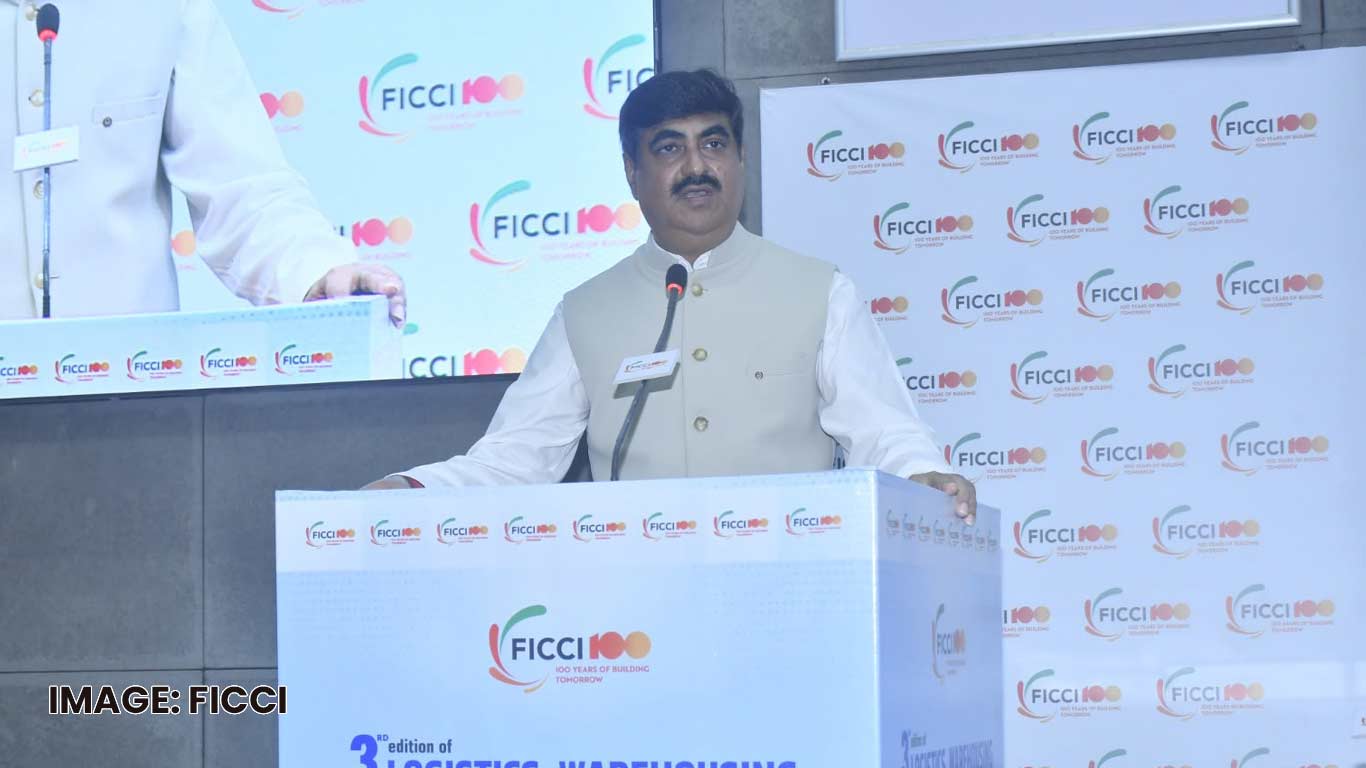
New Delhi, Sep 30 (KNN) India is developing a grading and rating framework for warehouses and cold-chain facilities in collaboration with the Asian Development Bank (ADB), Department for Promotion of Industry and Internal Trade (DPIIT) Joint Secretary Pankaj Kumar said at a FICCI summit.
Speaking at the third FICCI Logistics, Warehousing and Cold Chain Summit, Kumar said the government is yet to decide whether the ratings will be regulated by a government body or through industry self-regulation.
Graded facilities could receive easier access to government incentives and credit, he said.
DPIIT Expands Logistics Standards
The rating exercise follows two sets of warehouse standards and guidelines recently issued by DPIIT. The department is also working with states to incorporate warehousing and cold chains into state logistics policies and is supporting city logistics plans covering warehouses, dark stores and cold storage facilities.
DPIIT’s logistics division is also preparing guidelines for multimodal logistics parks (MMLPs), where warehousing and cold-chain facilities account for about 70 per cent of the area, Kumar said.
The guidelines are expected to promote value-added activities such as labelling, packaging, redistribution and digitalisation.
e-NWR Financing Gains Momentum
Shanti Lal Jain, Member, Warehousing Development and Regulatory Authority (WDRA), said commodities worth about Rs 12,419 crore were pledged against electronic negotiable warehouse receipts (e-NWRs) last year, up 43 per cent. Loans against e-NWRs also rose 43 per cent to around Rs 5,700 crore.
In the first five months of the current year, pledges have crossed Rs 6,000 crore and loans Rs 3,000 crore. The government has set a lending target of Rs 8,000 crore for the year.
Around 7,800 warehouses are currently registered with WDRA, with a combined capacity of about 6 crore metric tonnes, or roughly 30 per cent of national capacity. Registration remains voluntary.
The regulator has expanded its notified commodities to 246, covering food grains, pulses, oilseeds, spices, horticulture, cash crops and non-agricultural commodities.
“Unregistered storage can never be banked,” Jain said, urging industry to invest in registered scientific storage closer to farms and use government credit guarantees to reduce distress sales by farmers.
States Push Logistics Investment
Anisha Shrivastav, Executive Director, Madhya Pradesh Industrial Development Corporation (MPIDC), highlighted that Madhya Pradesh’s Logistics Policy 2025 provides a 30 per cent incentive on fixed capital investment for projects on land parcels of at least 25 acres, along with up to Rs 5 crore for external development.
A 255-acre multimodal logistics park has been developed in Indore through a public-private partnership, while another 110 acres have been earmarked in Jabalpur.
Logistics Costs Remain A Concern
Sachin Bhanushali, Advisor, FICCI Committee on Logistics and former CEO of Gateway Rail Freight, said road freight in India averages only 15-20 km per hour from origin to destination, while rail faces similar efficiency constraints when first- and last-mile movement is included.
He noted that these bottlenecks contribute to companies maintaining higher inventories than their counterparts in developed economies and called for every new industrial estate to have access to a rail-linked multimodal logistics park.
The summit also saw the launch of two reports — the FICCI-PwC study Redefining Warehousing with AI Driven Transformation and the FICCI-GT report India’s Cold Chain – From Storage to a Chain.
(KNN Bureau)








 Loading...