PPP model imp to generate awareness about cyber-attacks: Dy National Security Adviser
Updated: Oct 11, 2014 02:43:03pm

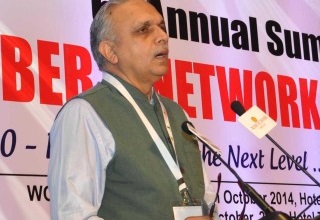
New Delhi, Oct 11 (KNN) Deputy National Security Adviser Arvind Gupta stressed upon the public-private partnership (PPP) model including government and private organisations to generate awareness among people in India about cyber-attacks.
Inaugurating the ASSOCHAM 6th annual summit on “Cyber and Network Security” here yesterday, Gupta said, “Internet has many stakeholders and the government is involved in terms of making laws and the private sectors are involved in creating technologies like hardware, software and so on and this can’t be seen in an isolated manner…. that’s why PPP model is important.”
Replying to a question on threats from China, Gupta said, “We have hardened our systems and we also have to have a proper insurance framework”. He said, “It’s not specific to one country or other but we have to be prepared to meet threats from everywhere…”
With regard to the new proposal the government is adopting for cyber security, Gupta said, “We have a new cyber security framework which is being implemented with several elements like technological, legal and related to creation of awareness etc so all this is part of cyber security framework and which is being implemented.”
Chief Executive Officer of Mahindra SSG, Dinesh Pillai, said, with increasing use of information technology enabled services such as e-governance; online business and electronic transactions protection of personal and sensitive data have assumed paramount importance. The economic growth of any nation and its security whether internal or external and competitiveness depends on how well is its cyberspace secured and protected.
Pillai further said, cyber security threats pose one of the most serious economic and national security challenges and the threats in cyberspace are serious both from the point view of government as well as corporate. Nevertheless, if they are addressed effectively then cyberspace will surely go a long way in contributing to economic growth, empowerment and secured digital India.
During the conference, ASSOCHAM-Mahindra SSG study titled ‘Cyber and Network security framework’ was released.
The study reveals that during the years 2011, 2012, 2013 and 2014 (till May), a total number of 21,699, 27,605, 28,481 and 9,174 Indian websites were hacked by various hacker groups spread across worldwide. In addition, during these years, a total number of 13,301, 22060, 71,780 and 62,189 security incidents respectively reported.
These attacks have been observed to be originating from the cyberspace of a number of countries including the US, Europe, Brazil, Turkey, china, Pakistan, Bangladesh, Algeria and the UAE, highlights the study.
“Growing internet penetration and rising popularity of online banking have made India a favourite among cybercriminals, who target online financial transactions using malware and India ranks third after Japan and the US in the tally of countries most affected by online banking malware during the April-June quarter of 2014”, reveals the study.
Vice President, Boeing International and President, Boeing India, Pratyush Kumar said, the organizations should appoint independent agencies as cyber security auditors to conduct security audit, vulnerability assessment and penetration testing periodically or as and when they upgrade their IT infrastructure. (KNN Bureau)
Inaugurating the ASSOCHAM 6th annual summit on “Cyber and Network Security” here yesterday, Gupta said, “Internet has many stakeholders and the government is involved in terms of making laws and the private sectors are involved in creating technologies like hardware, software and so on and this can’t be seen in an isolated manner…. that’s why PPP model is important.”
Replying to a question on threats from China, Gupta said, “We have hardened our systems and we also have to have a proper insurance framework”. He said, “It’s not specific to one country or other but we have to be prepared to meet threats from everywhere…”
With regard to the new proposal the government is adopting for cyber security, Gupta said, “We have a new cyber security framework which is being implemented with several elements like technological, legal and related to creation of awareness etc so all this is part of cyber security framework and which is being implemented.”
Chief Executive Officer of Mahindra SSG, Dinesh Pillai, said, with increasing use of information technology enabled services such as e-governance; online business and electronic transactions protection of personal and sensitive data have assumed paramount importance. The economic growth of any nation and its security whether internal or external and competitiveness depends on how well is its cyberspace secured and protected.
Pillai further said, cyber security threats pose one of the most serious economic and national security challenges and the threats in cyberspace are serious both from the point view of government as well as corporate. Nevertheless, if they are addressed effectively then cyberspace will surely go a long way in contributing to economic growth, empowerment and secured digital India.
During the conference, ASSOCHAM-Mahindra SSG study titled ‘Cyber and Network security framework’ was released.
The study reveals that during the years 2011, 2012, 2013 and 2014 (till May), a total number of 21,699, 27,605, 28,481 and 9,174 Indian websites were hacked by various hacker groups spread across worldwide. In addition, during these years, a total number of 13,301, 22060, 71,780 and 62,189 security incidents respectively reported.
These attacks have been observed to be originating from the cyberspace of a number of countries including the US, Europe, Brazil, Turkey, china, Pakistan, Bangladesh, Algeria and the UAE, highlights the study.
“Growing internet penetration and rising popularity of online banking have made India a favourite among cybercriminals, who target online financial transactions using malware and India ranks third after Japan and the US in the tally of countries most affected by online banking malware during the April-June quarter of 2014”, reveals the study.
Vice President, Boeing International and President, Boeing India, Pratyush Kumar said, the organizations should appoint independent agencies as cyber security auditors to conduct security audit, vulnerability assessment and penetration testing periodically or as and when they upgrade their IT infrastructure. (KNN Bureau)











 Loading...