Textile Industry Urges Govt To Scrap Cotton Import Duty Amid Falling Production
Updated: Jan 13, 2026 03:28:12pm


Textile Industry Urges Govt To Scrap Cotton Import Duty Amid Falling Production
New Delhi, Jan 13 (KNN) A Confederation of Indian Textile Industry (CITI) delegation comprising leading figures from the textile and apparel sector met Union Minister of Agriculture & Farmers’ Welfare Shivraj Singh Chouhan in Delhi on January 9, 2026, seeking his intervention for the permanent removal of import duty on cotton of all varieties.
Concerns Over Reinstatement of Cotton Import Duty
The delegation apprised the Minister of the industry’s concerns regarding the reinstatement of cotton import duty from January 1, 2026, warning that it would adversely impact the competitiveness of India’s textile and apparel sector.
In response, the Minister assured that the issues raised would be carefully examined during the review process.
Industry members highlighted that cotton production in India has been steadily declining and is projected to fall to its lowest level in the last two decades this year, intensifying concerns over supply shortages. They cautioned that reimposing the import duty would further aggravate cost pressures for textile companies.
Role of Imports in Meeting Specialised Demand
The delegation noted that over the past decade, average cotton imports have been around 20 lakh bales, accounting for about 6.8 percent of India’s average domestic production.
These imports are largely driven by quality and specification requirements for specialised cotton and back-to-back export orders, and do not displace domestic cotton.
Impact on Cost Competitiveness
The industry pointed out that the availability of contamination-free and specialised cotton required for high-value and export-oriented textiles remains limited, making selective imports necessary.
They further highlighted that after the imposition of import duty, domestic cotton prices have consistently traded at a premium to international benchmarks, increasing raw material costs for spinners and manufacturers and eroding competitiveness across the value chain.
The delegates also flagged that competing textile-exporting countries such as Bangladesh and Vietnam allow duty-free access to cotton, giving them a structural cost advantage over Indian manufacturers.
MSP Safeguards Farmers’ Interests
Reiterating support for the government’s objective of protecting farmers, the industry stated that farmers’ interests are already effectively safeguarded through the Minimum Support Price (MSP) mechanism.
The MSP for cotton has been increased by about 8 percent in the current season and is currently above prevailing market prices, ensuring a strong safety net for farmers even as the industry faces rising input costs and external trade pressures.
Export Headwinds and US Tariff Challenge
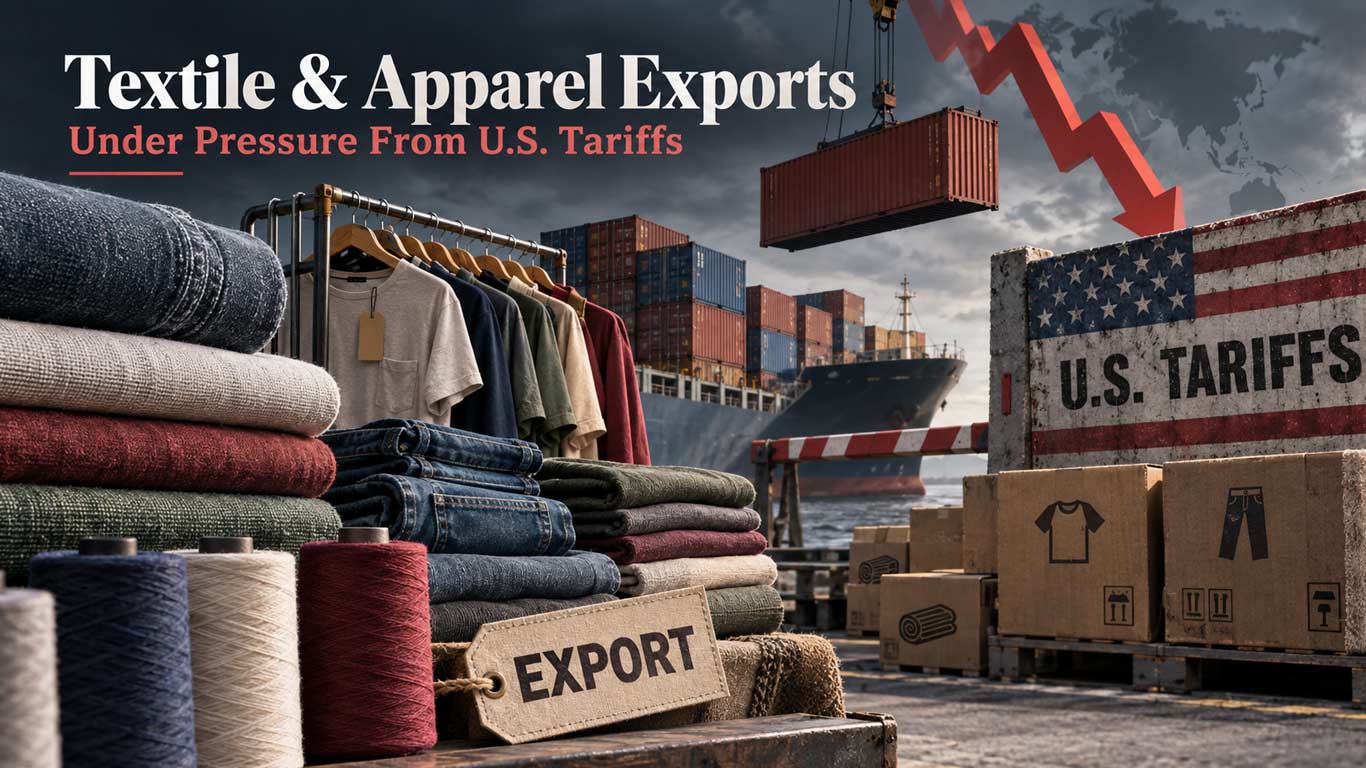
One of the largest generators of employment, the textile and apparel sector is currently facing a major challenge due to the 50 percent US tariff effective August 27, 2025.
Cotton dominates India’s textile exports, and the US remains the single-largest market, accounting for nearly 28 percent of total textile and apparel export revenues.
India’s textile and apparel exports to the US were valued at nearly USD 11 billion in the financial year 2024–25, underlining the sector’s vulnerability to rising costs and adverse trade measures.
(KNN Bureau)







 Loading...