Gujarat Achieves 90% of PM Surya Ghar Target With 9.08 Lakh Rooftop Solar Installations: Govt
Updated: Nov 03, 2026 04:17:12pm

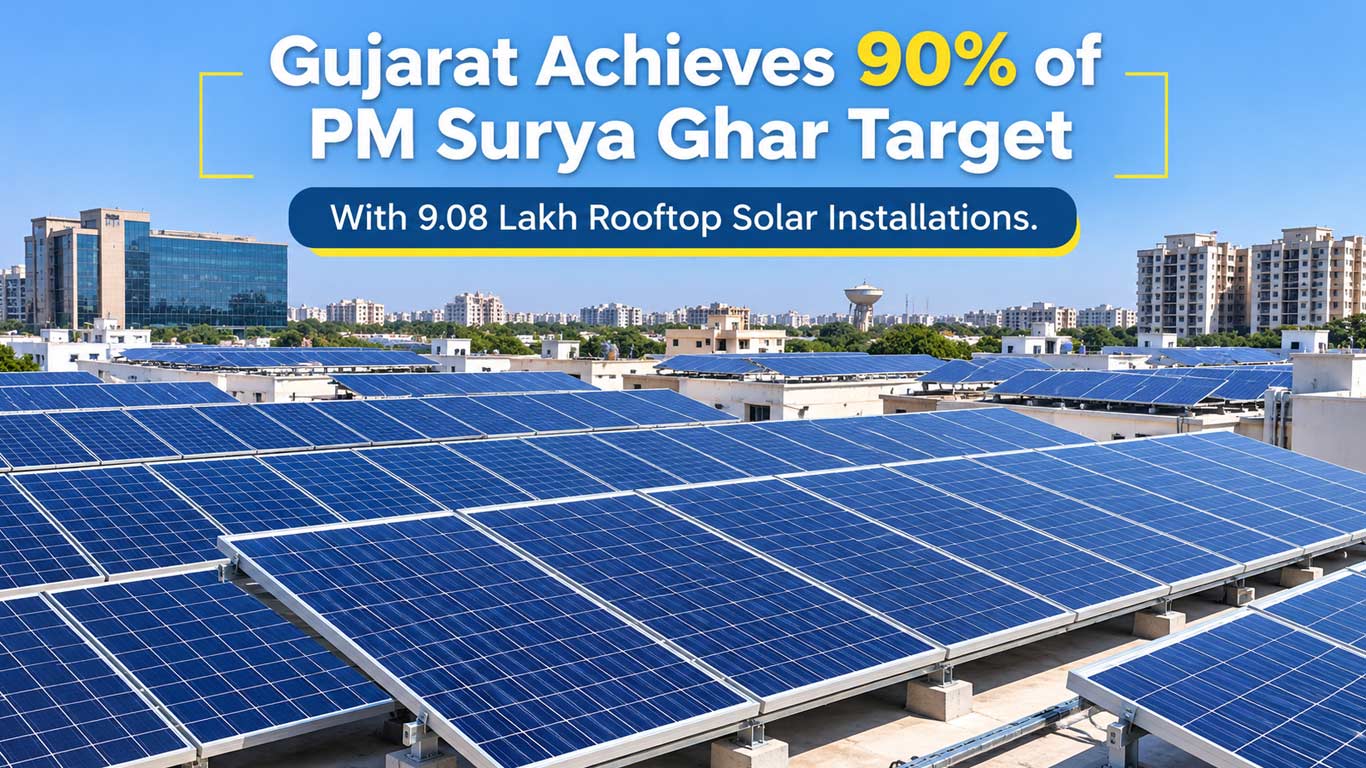
Gujarat Achieves 90% of PM Surya Ghar Target With 9.08 Lakh Rooftop Solar Installations: Govt
Gandhinagar, Nov 3 (KNN) Gujarat has installed 9.08 lakh residential rooftop solar systems with a combined capacity of 3,408 MW under the PM Surya Ghar: Muft Bijli Yojana, achieving 90 per cent of its target of 10 lakh installations by March 2027, according to a state government release.
The state accounts for 18.21 per cent of India's total residential rooftop solar installations under the scheme, ANI reported.
Additional Financial Incentives for Households
To encourage adoption, the Gujarat government provides Rs 2,950 in assistance towards regulatory charges for residential rooftop solar systems of up to 6 kW. It has also waived network strengthening charges and the requirement for net metering agreements.
In addition to central financial assistance (CFA), the state offers further subsidies. Eligible Scheduled Caste (SC) and Scheduled Tribe (ST) households installing systems of up to 2.18 kWp need to contribute only 5 per cent of the prescribed cost.
Other eligible consumers pay 10 per cent, with the state covering the remaining cost after deducting central assistance and the consumer's contribution.
The state also allows residential consumers to use net metering, sell surplus electricity to the grid and install rooftop systems without a connected-load limit. Domestic consumers are exempt from banking charges.
Gujarat's Renewable Energy Capacity
As of September 30, 2026, Gujarat's installed renewable energy capacity stood at 55,511.46 MW, accounting for 18.55 per cent of India's total capacity.
Solar power contributed 36,234.55 MW, representing 21.2 per cent of the country's installed solar capacity, while wind energy capacity stood at 17,043.76 MW, accounting for 28.8 per cent of India's total.
The expansion supports India's broader renewable energy targets, including meeting 50 per cent of electricity requirements through renewable sources by 2030 and achieving net-zero emissions by 2070.
(KNN Bureau)








 Loading...