Jharkhand Steel MSMEs Risk Falling Behind In India’s Green Transition: IEEFA
Updated: Jul 22, 2025 03:36:48pm


Jharkhand Steel MSMEs Risk Falling Behind In India’s Green Transition: IEEFA
Ranchi, July 22 (KNN) As India’s major steel producers chart ambitious decarbonisation plans, a parallel crisis is emerging in Jharkhand’s steel corridor, warns a new report by the Institute for Energy Economics and Financial Analysis (IEEFA).
The study highlights the mounting challenges faced by micro, small and medium enterprises (MSMEs) in aligning with the country’s clean energy goals, raising concerns over regional equity and industrial inclusivity.
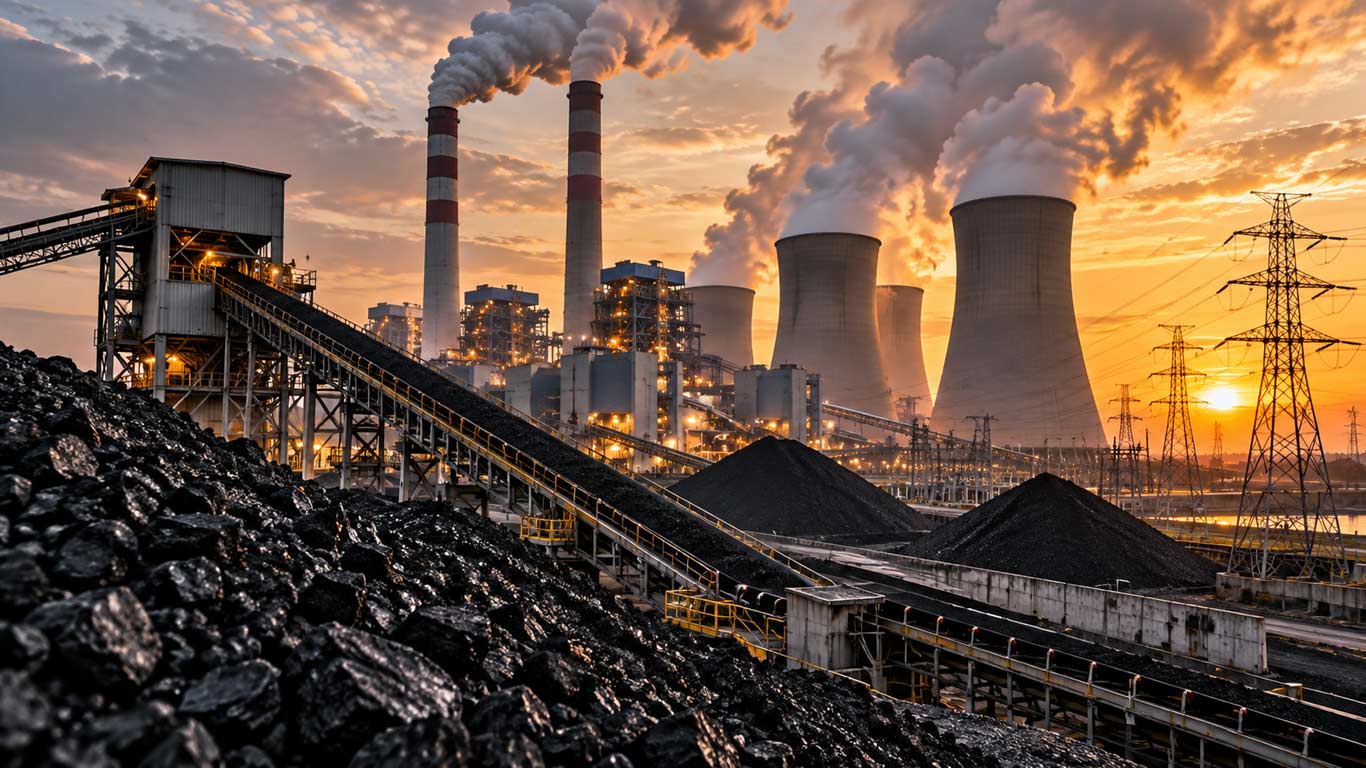
Titled "Financing the MSME Transition in Jharkhand’s Steel Sector", the report reveals that Jharkhand’s steel sector emits nearly 3.9 million tonnes of carbon dioxide annually, primarily from coal-based direct reduced iron (DRI) units and legacy induction furnaces operated by MSMEs.
These enterprises, which are central to local employment and secondary steel production, lack access to modern technologies, adequate financing, and policy support needed for decarbonisation.
While India’s steel output surged to 150 million tonnes in 2024 and is projected to reach 255 million tonnes by 2030, the green momentum is largely driven by large-scale players.
Companies like JSW Steel and Tata Steel have committed significant investments to curb emissions — JSW alone has pledged Rs 86,000 crore to reduce its emission intensity to 1.95 tonnes of CO₂ per tonne of crude steel by 2030. In contrast, MSMEs risk falling behind.
“Steel is one of the most energy- and emissions-intensive sectors. Without targeted support, MSMEs risk exclusion from India’s low-carbon transition, which could lead to job losses and widen regional disparities,” said Labanya Prakash Jena, co-author of the report and Sustainable Finance Consultant, IEEFA.
Jharkhand's MSME segment operates around 3.6 million tonnes per annum of coal-based DRI capacity, coexisting with nearly 19 million tonnes of hot metal production by integrated majors such as Tata Steel and SAIL.
Despite the state’s historic role in Indian steelmaking, many MSMEs remain reliant on outdated, high-emission technologies, with limited awareness or incentive to adopt cleaner alternatives like electric arc furnaces or green hydrogen-based processes.
The report identifies multiple barriers: energy efficiency and renewable energy investments are often viewed by MSMEs as non-core, with long payback periods; meanwhile, Energy Service Companies (ESCOs) that could facilitate the transition struggle with weak financial positions and limited access to working capital.
To bridge this gap, IEEFA proposes the establishment of a Green Financing Facility for Just Transition (GFF-JT) in Jharkhand.
The facility would offer early-stage funding for technical assessments, financial structuring, and legal advisory services — enabling MSMEs and ESCOs to prepare credible, bankable green projects that can attract public and private investment.
The report outlines a three-pronged strategy for emission reduction in the MSME segment: enhancing energy efficiency, integrating renewable energy, and adopting material-efficient practices. Energy efficiency alone, it notes, could cut coal usage by up to 25 percent and boost productivity by 20 percent.
IEEFA warns that without a tailored support mechanism, India’s green steel ambitions risk entrenching inequalities within the sector.
As large companies embrace low-carbon innovation, smaller units may become uncompetitive or face closure — threatening livelihoods and disrupting regional industrial ecosystems.
The report recommends that the GFF-JT model be replicated across other key steel-producing states such as Odisha, Chhattisgarh, and West Bengal, where MSMEs face similar structural barriers.
(KNN Bureau)





 Loading...