Falling Oil Prices To Ease Inflation And Support Growth Across India, Asia: Standard Chartered
Updated: Jul 07, 2026 03:37:45pm

Falling Oil Prices To Ease Inflation And Support Growth Across India, Asia: Standard Chartered
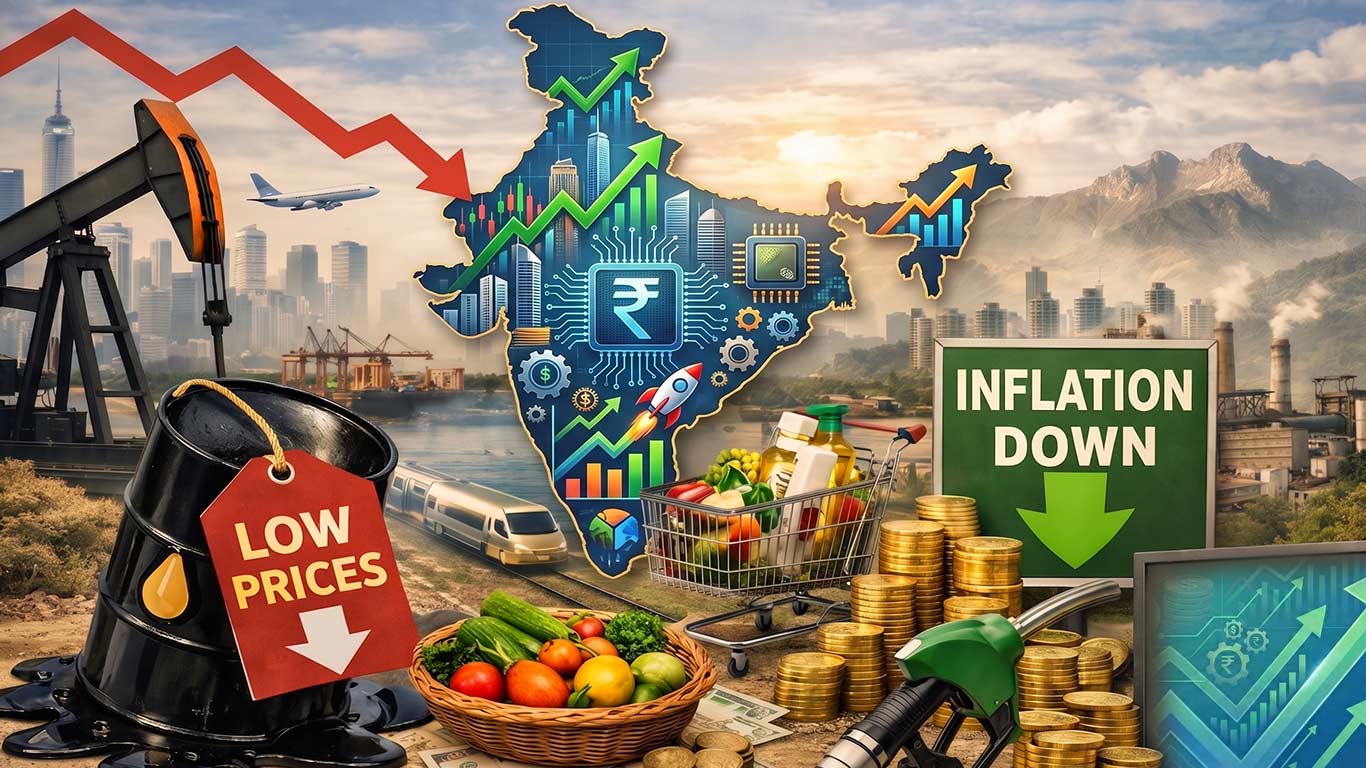
New Delhi, Jul 7 (KNN) Lower crude oil prices are giving Reserve Bank of India (RBI) and other Asian central banks more policy space to support growth, with softer energy inflation easing balance of payments (BoP) pressures, according to a report by Standard Chartered.
The global bank said falling oil prices are expected to ease inflation across much of Asia, particularly for import-dependent economies like India.
"Lower oil prices offer disinflationary relief for monetary policies, but unevenly across Asia. Regional risk assets and local-currency (LCY) bonds are supported," ANI reported, citing the report.
Standard Chartered highlighted that most Asian economies are net energy importers, meaning lower crude prices ease inflationary pressures and improve policymakers' ability to prioritise growth.
The bank said that heavy energy-import-reliant economies such as India, Thailand and the Philippines stand to benefit as easing energy inflation reduces balance-of-payments pressures, allowing their central banks to focus on growth.
Uneven Impact Across Asia
The report noted that the relief would not be evenly distributed across the region, given differing inflation dynamics, adding that regional monetary policies are expected to remain divergent.
While energy-importing economies including India stand to gain from lower oil prices, it said economies such as South Korea and Singapore continue to face demand-driven inflation linked to the artificial intelligence boom, which could keep their central banks holding interest rates higher for longer.
Standard Chartered emphasised that lower energy prices are supportive of regional financial markets, viewing them as positive for Asian risk assets and local-currency bonds.
El Nino Risk
Despite the constructive outlook, the report cautioned that weather-related risks could reverse some of the gains from lower oil prices, flagging the potential formation of a "Super El Nino" — which it estimated at a 63 per cent probability of occurring in the fourth quarter — as a growing reflation tail risk for Asia.
It said extreme heat and drought could disrupt agricultural output, while increased demand for air-cooling could push energy prices higher again, reviving inflationary pressures across the region.
(KNN Bureau)









 Loading...


