Niti Aayog Working Paper Calls For Making India Global Workforce Hub
Updated: May 21, 2026 03:28:01pm

Niti Aayog Working Paper Calls For Making India Global Workforce Hub
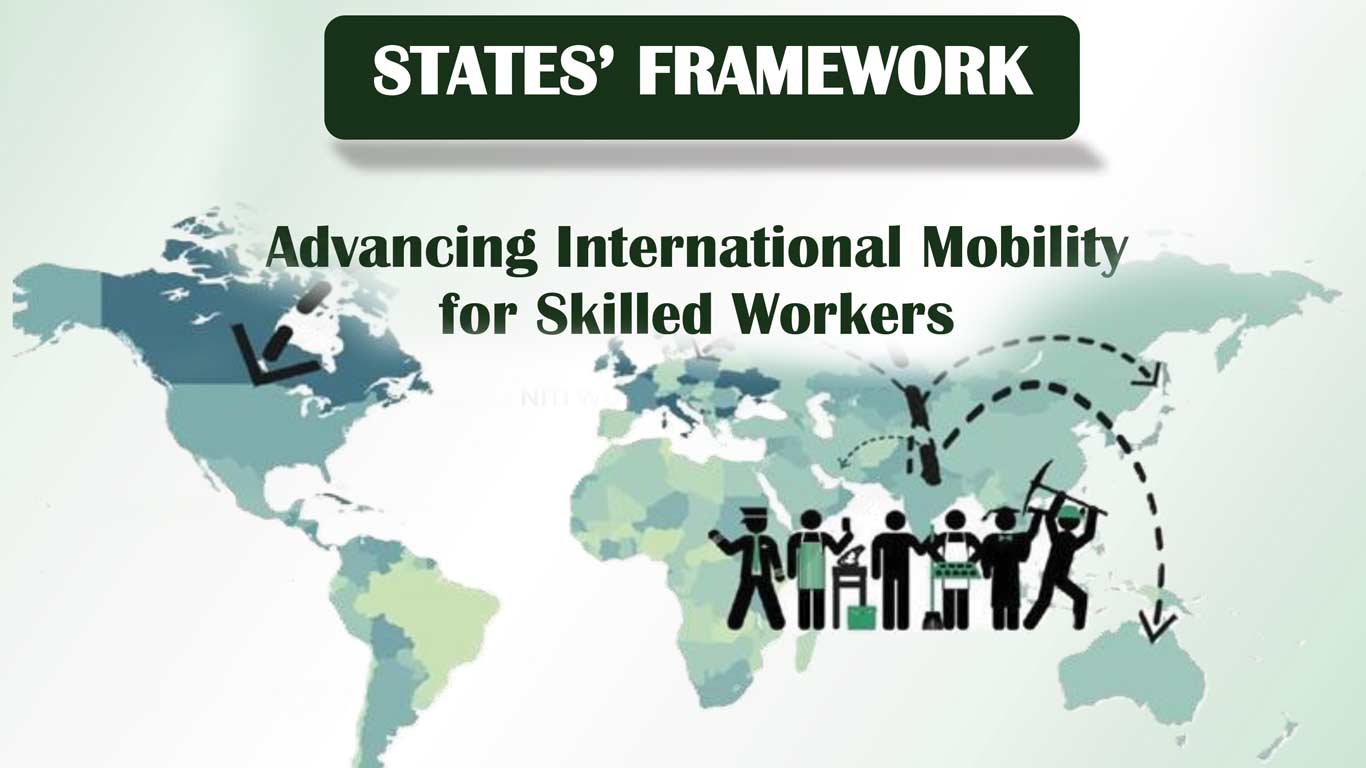
New Delhi, May 21 (KNN) Government think tank Niti Aayog in a working paper has proposed a comprehensive framework aimed at strengthening India’s position as a global workforce hub through structured, safe and demand-driven migration systems.
The working paper titled ‘States Framework on International Mobility’, identifies ‘circular mobility’ as the basis of India’s emerging international mobility strategy, under which workers and students move abroad for employment or education, return with skills and experience, and later re-engage with overseas opportunities.
According to the paper, this model can help India balance domestic labour priorities with rising global demand for skilled professionals while supporting economic transformation and deeper global integration.
It noted that destination countries benefit through labour supply and stronger economic output, while origin countries gain from remittances, lower unemployment and the return of skilled workers.
Global Labour Demand Creating New Opportunities
The paper added that ageing populations, demographic shifts and labour shortages are increasing demand for migrant workers in sectors such as healthcare, construction, logistics, ICT, hospitality, green industries and care services.
Referring to studies by the International Labour Organization, World Economic Forum and United Nations Department of Economic and Social Affairs, the paper said migrant workers now account for nearly 4.7 percent of the global labour force and are increasingly critical for sustaining growth in advanced economies.
It noted that India, with an overseas migrant population of 18.5 million and a diaspora of around 35 million, is well placed to meet rising global labour demand.
The paper also highlighted that India received USD 137.67 billion in remittances in 2024, equivalent to about 3.5 percent of GDP, adding that remittances have become a stable and counter-cyclical source of foreign exchange, consistently exceeding gross inward FDI inflows in recent years.
Gradual shift in Indian migration patterns
While Gulf countries continue to remain major destinations for low- and semi-skilled workers, there has been increasing migration to developed economies such as the United States, Canada, Australia, Germany, and Japan, particularly among skilled professionals and students transitioning into long-term employment.
According to the report, younger workers are increasingly driven by long-term career prospects, safer environments and structured skill-development opportunities rather than solely higher incomes.
The paper said India must adopt an emigration strategy that safeguards worker dignity across skill levels, builds fair labour mobility partnerships and aligns outward migration with national development goals.
It also stressed the need to better prepare prospective migrants through orientation programmes, counselling, language training and psychosocial support.
Recommendations for States
The working paper urged states to align skilling systems with global labour-market demands through State Migration Dashboards, district-level readiness mapping and stronger overseas-oriented training at ITIs, polytechnics and specialised finishing schools.
It also recommended bilateral agreements for mutual recognition of skills and alignment with international qualification frameworks such as the European Qualifications Framework, ASEAN Qualifications Reference Framework and International Standard Classification of Occupations.
The framework stressed closer coordination among states, employers and recruitment agencies, while calling for language training, cultural orientation and financial support for low-income candidates.
It also emphasised ethical recruitment through Ministry of External Affairs-registered agents and integration with the eMigrate portal, alongside dedicated state recruitment agencies to improve transparency and worker protection.
To strengthen support systems, the paper proposed Mobility Resource Centres for counselling, documentation, grievance redressal and financial literacy services, as well as post-placement monitoring mechanisms linked to State Migration Dashboards.
It further recommended universal insurance, stronger safeguards for women migrants and reintegration programmes for returnee workers through skilling, entrepreneurship and recognition of overseas experience, positioning international mobility as a core part of India’s employment and skilling strategy.
(KNN Bureau)








 Loading...