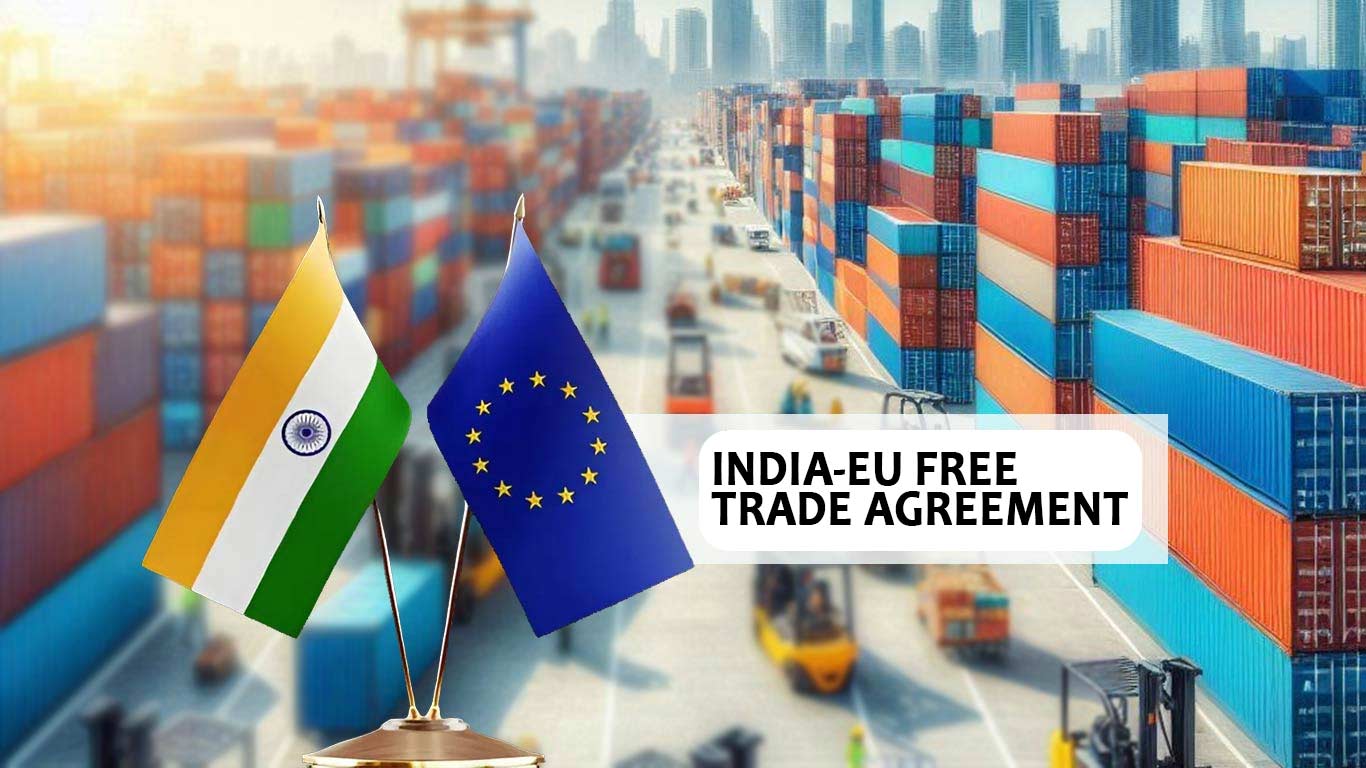
India-EU Begin 10th Round Of FTA Talks, Aim For Year-End Pact
Updated: Mar 10, 2025 02:31:18pm

India-EU Begin 10th Round Of FTA Talks, Aim For Year-End Pact
New Delhi, Mar 10 (KNN) India and the European Union (EU) will start the 10th round of negotiations for a bilateral Free Trade Agreement (FTA) on Monday, with a clear deadline from its top leadership to finalise the pact by this year-end.
While the issues that were holding up the progress remain, the global tariff war set off by the US, change in approach of India to import duties reinforced in the latest budget and flexibility shown by EU on matters of carbon tax and related matters could push negotiations much further in this round, according to experts.
The 10th round of talks in Brussels from March 10 to March 14 comes immediately on the heels of top-level engagement between the two sides with the European Commission’s President Ursula von der Leyen and a full college of commissioners visiting India late last month for detailed talks on the entire spectrum of the relationship.
For India, the EU is as big a market as the US with bilateral goods trade of USD 190 billion. While there is a lot of uncertainty on what a Bilateral Trade Agreement (BTA) with the US would entail, talks with the EU have been going on since 2022 in the current phase.
From the Indian side, the concerns centre around agriculture, duties on wines and automobiles, and flexibility on movement of professionals for services delivery.
In agriculture, the EU is pushing for India to cut tariffs on cheese and skimmed milk powder while it imposes high duties and very tough standards. Even if tariffs are reduced, the EU’s regulatory framework will remain a major hurdle for Indian farmers and food producers.
The EU wants India to cut duties on wines to 30-40 per cent from 150 per cent. India has offered 50 per cent duties in its trade deal with Australia and this might be repeated for the EU.
The duty cuts in labour intensive sectors can come very early on in the deal. Currently, India’s textile exports to the EU face tariffs between 12-16 per cent, making Indian products less competitive compared to exports from countries like Bangladesh and Vietnam, which enjoy preferential market access under EU trade agreements.
The EU imposes restrictions on remote online service delivery and does not recognise India as a data secure country, thereby restricting data flows. In services, European firms are seeking greater access to India’s banking, legal, accountancy, auditing, and financial services sectors.
To these old issues new ones have been added through the Carbon Border Adjustment Mechanism (CBAM) or carbon tax.
India has asked for exemption for small and medium enterprises from the obligations of CBAM. At the 2nd Trade and Technology Council (TTC) meeting, both sides agreed to address the challenges that the small and medium businesses will face due to CBAM.
(KNN Bureau)




 Loading...