US Tariff Shift May Boost India's Electronics Export Prospects In The Market
Updated: Apr 07, 2025 04:16:35pm

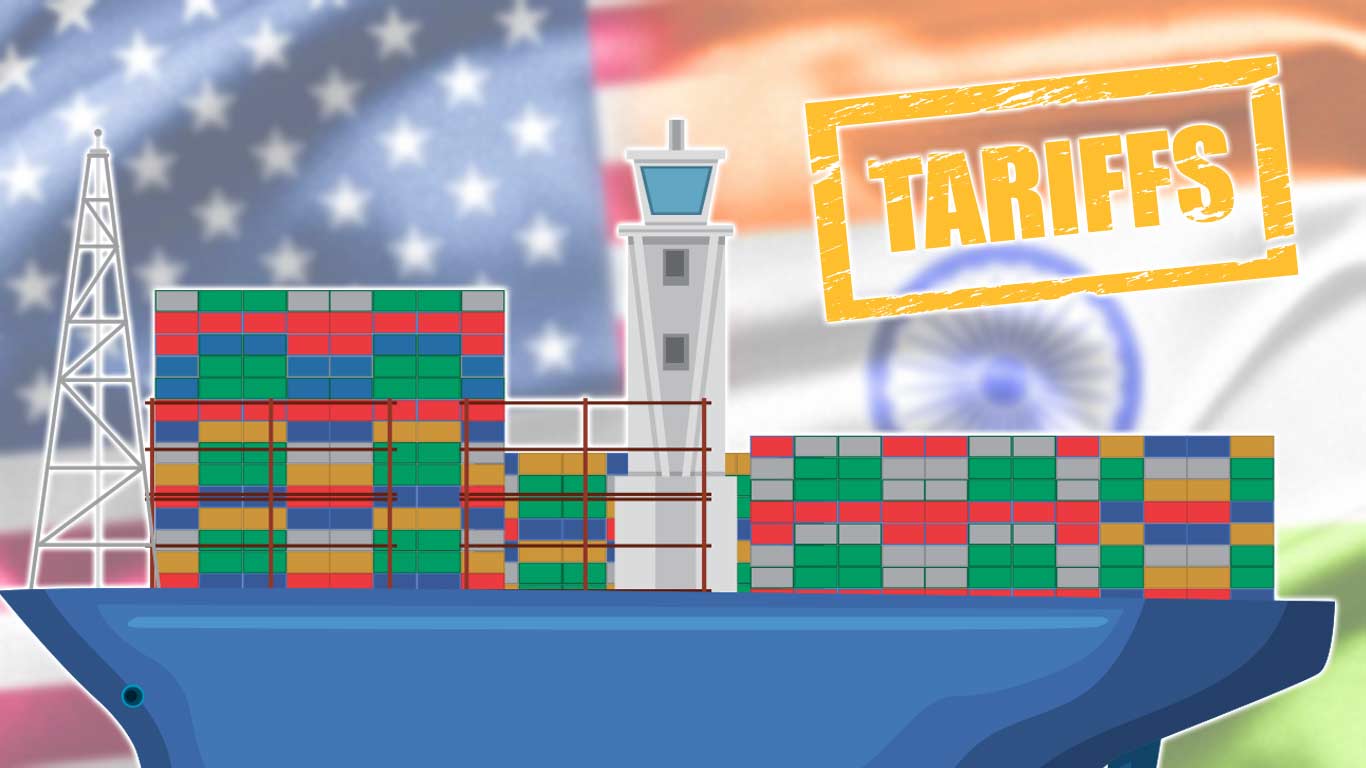
US Tariff Shift May Boost India's Electronics Export Prospects In The Market
New Delhi, April 7 (KNN) India has secured a significant advantage in the recent round of reciprocal US tariff announcements, positioning itself more favorably than major electronics-exporting competitors including China, Vietnam, Thailand, and Indonesia, according to industry experts.
The tariff structure now places Chinese exports at a considerable disadvantage with combined tariffs ranging fr0m 54 percent to 79 percent, while Vietnamese products face tariffs of approximately 44 percent.
This differential creates a strategic opportunity for India to expand its electronics exports to the American market.
Although certain nations such as Brazil and Egypt have obtained marginally better tariff terms, India maintains a substantial competitive edge in the evolving global trade environment.
Pankaj Mohindroo, Chairman of the India Cellular and Electronics Association (ICEA), underscored this point, stating: "The BTA must now be the cornerstone of our trade strategy, unlocking stable market access, tariff predictability, and a framework for scaling high-value electronics exports."
Experts stress that India must act decisively, utilising trade diplomacy, implementing domestic policy adjustments, and demonstrating industrial resilience to maintain its competitive position.
Ashok Chandak, President of the India Electronics and Semiconductor Association (IESA), suggested a dual approach: "Negotiating a bilateral trade deal could ease pressure while adjusting import tariffs on select US goods may help maintain trade balance. India could adopt a dual-track approach—balancing negotiations with countermeasures to protect its economic interests."
The shared ambition of expanding bilateral trade to USD 500 billion presents a foundation for developing a mutually beneficial agreement between the two nations.
This aligns with broader strategic goals while addressing specific trade concerns.
Significantly, semiconductors and pharmaceuticals remain unaffected by the new tariff measures, reflecting their strategic importance in global supply chains and public health systems.
Furthermore, India's relatively low electronics imports fr0m the United States provide flexibility for potential tariff adjustments, helping to ensure stability in trade relations.
Chandak confirmed IESA's commitment "to working closely with the Ministry of Electronics and IT and the Ministry of Commerce and Industry to develop strategies that minimise risks and strengthen India's global competitiveness."
Mohindroo highlighted the urgency of the situation, noting that "with potential retaliatory moves fr0m other major economies on the horizon, India must focus on converting this strategic advantage into sustained export growth and deeper supply chain integration."
As global supply chains undergo realignment in response to US policy adjustments, India has a unique opportunity to increase its integration into international electronics markets.
Prabhu Ram, VP-Industry Research Group at CyberMedia Research (CMR), observed that "to fully capitalise on this shift, India must advance strategic policy initiatives that enhance its attractiveness and deepen integration into global value chains."
With appropriate policy implementation and strategic trade negotiations, India is well-positioned to establish itself as a prominent player in the global electronics sector while simultaneously strengthening its economic relationship with the United States.
(KNN Bureau)







 Loading...