MSME Amendment Bill Could Unlock Working Capital Through Time-Bound Dispute Resolution: Crisil
Updated: Aug 18, 2026 01:25:32pm

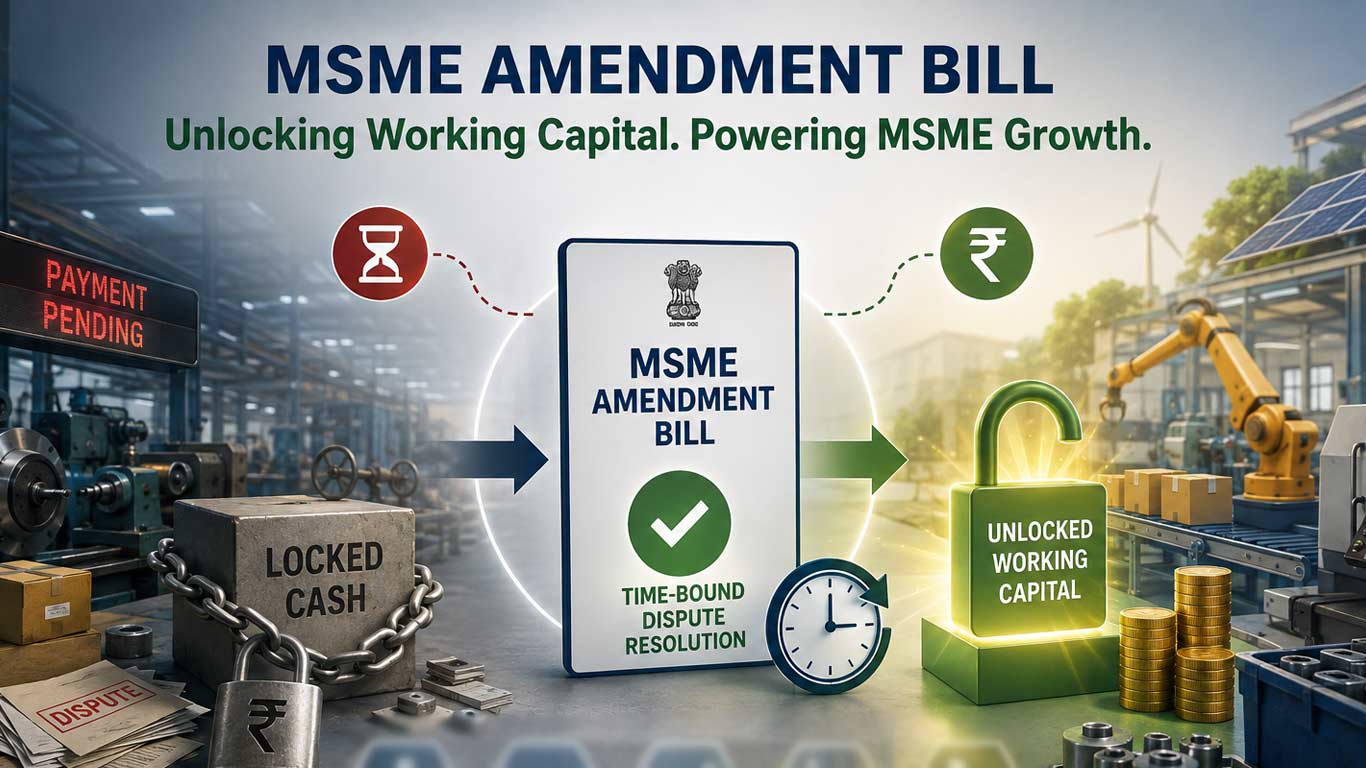
MSME Amendment Bill Could Unlock Working Capital Through Time-Bound Dispute Resolution: Crisil
New Delhi, Aug 18 (KNN) The Micro, Small and Enterprises Development (Amendment) Bill, 2026, could strengthen payment discipline and unlock working capital for MSMEs by introducing time-bound mechanisms for resolving delayed-payment disputes, according to Crisil Intelligence.
Time-Bound Dispute Resolution
Drawing lessons from the Insolvency and Bankruptcy Code (IBC), Crisil said the proposed framework seeks to address a major challenge for MSMEs by setting clear timelines for mediation and arbitration proceedings before Micro and Small Enterprises Facilitation Councils (MSEFCs).
Under the proposed amendments, mediation would have to be completed within 90 days from the date fixed for the first appearance. If mediation fails, the dispute would be referred to arbitration within 30 days, with awards required to be issued within 90 days of completion of pleadings.
Over Rs 55,000 Crore in Delayed Payment Claims
MSME Samadhaan data showed that as of August 14, 2026, micro and small enterprises had filed 2,56,892 delayed-payment claims worth Rs 55,244 crore. Claims worth Rs 20,979 crore remained pending, with around 40,580 applications unresolved for over a year.
Crisil Intelligence Director Pushan Sharma said the Bill’s time-bound dispute resolution, stronger award enforcement and enhanced facilitation councils could improve payment discipline and unlock MSME working capital.
He said its impact would depend on effective implementation and institutional capacity.
Flexibility for States to Address Caseloads
The Bill also proposes greater flexibility for states in determining the composition and number of facilitation councils. This could help address uneven caseloads and improve access to dispute-resolution mechanisms.
According to MSME Samadhaan data, Karnataka's 35 MSEFCs handle an average of 397 applications each, compared with 1,767 applications across Rajasthan's nine councils and 1,095 across Uttar Pradesh's 19 councils.
Stronger Protection for MSMEs
The proposed legislation seeks to strengthen MSME protection when buyers challenge MSEFC awards. Buyers would have to deposit 75 percent of the award amount, with at least 50 percent potentially released to the MSME if proceedings exceed six months.
Mediated settlements and arbitral awards would also be recoverable as land revenue arrears and recognised as enforceable debt under the insolvency framework.
Implementation Capacity Key to Reform
“Delayed payments strain MSME liquidity, raise borrowing costs and disrupt operations,” said Elizabeth Master, Associate Director, Crisil Intelligence.
She said the proposed timelines could be strengthened through structured case management, while adequate staffing, trained mediators and arbitrators, stronger council infrastructure and digital monitoring would be crucial for effective implementation.
(KNN Bureau)









 Loading...