MSMEs Show Signs Of Recovery On Policy Push But Structural Gaps Persist
Updated: Feb 09, 2026 01:29:02pm


MSMEs Show Signs Of Recovery On Policy Push But Structural Gaps Persist
New Delhi, Feb 9 (KNN) India's micro, small and medium enterprises (MSMEs) are showing signs of recovery and resilience following policy reforms and Budget measures but persistent structural issues and global uncertainties continue to pose challenges.
Recent government steps, including enhanced credit and equity support, higher growth thresholds, faster payments and entrepreneurship schemes are strengthening the sector and making it more competitive, reported Business Standard quoting industry experts.
"The measures in the Union Budget taken together position the MSME sector on a stronger footing today, making it more resilient and competitive than before," says Binod Kumar, managing director (MD) and chief executive officer (CEO), Indian Bank.
Changes to the Trade Receivables Discounting System (TReDS), such as lowering the buyer turnover threshold to Rs 250 crore from Rs 500 crore, have led to improvement in cash flow for MSMEs.
However, critical liquidity gaps remain, particularly for micro enterprises, which make up over 95 percent of India's 63 million MSMEs and face an estimated credit shortfall of more than Rs 20 trillion. Experts suggest that policy support could be sharpened by increasing credit guarantee cover and linking interest subvention to actual turnover.
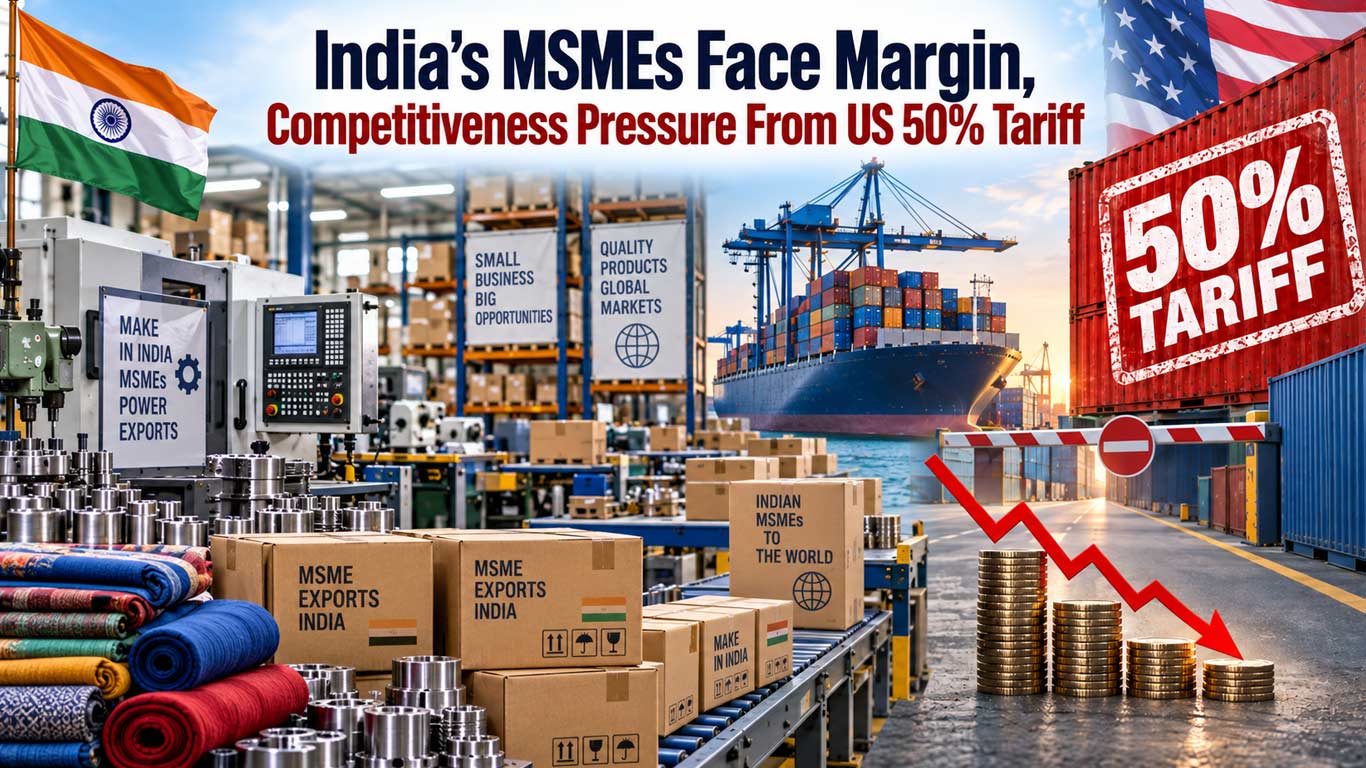
Export-oriented MSMEs also continue to grapple with global tariff uncertainties and inconsistent trade signals. While tariff certainties are emerging after back-to-back trade deals between India and its partners, exporters say greater predictability is needed to plan long-term strategies effectively.
Delayed payments remain another major concern and a big irritant, with the latest Economic Survey noting that nearly Rs 8.1 trillion is tied up in overdue invoices, affecting working capital and growth prospects. Moreover, MSMEs often hesitate to pursue legal route to recover their dues for fear of harming business relationships.
Industry leaders believe that while reforms are constructive, continued policy engagement, improved export infrastructure and streamlined procedures will be key to unlocking the sector's full potential amid global headwinds.
(KNN Bureau)







 Loading...


