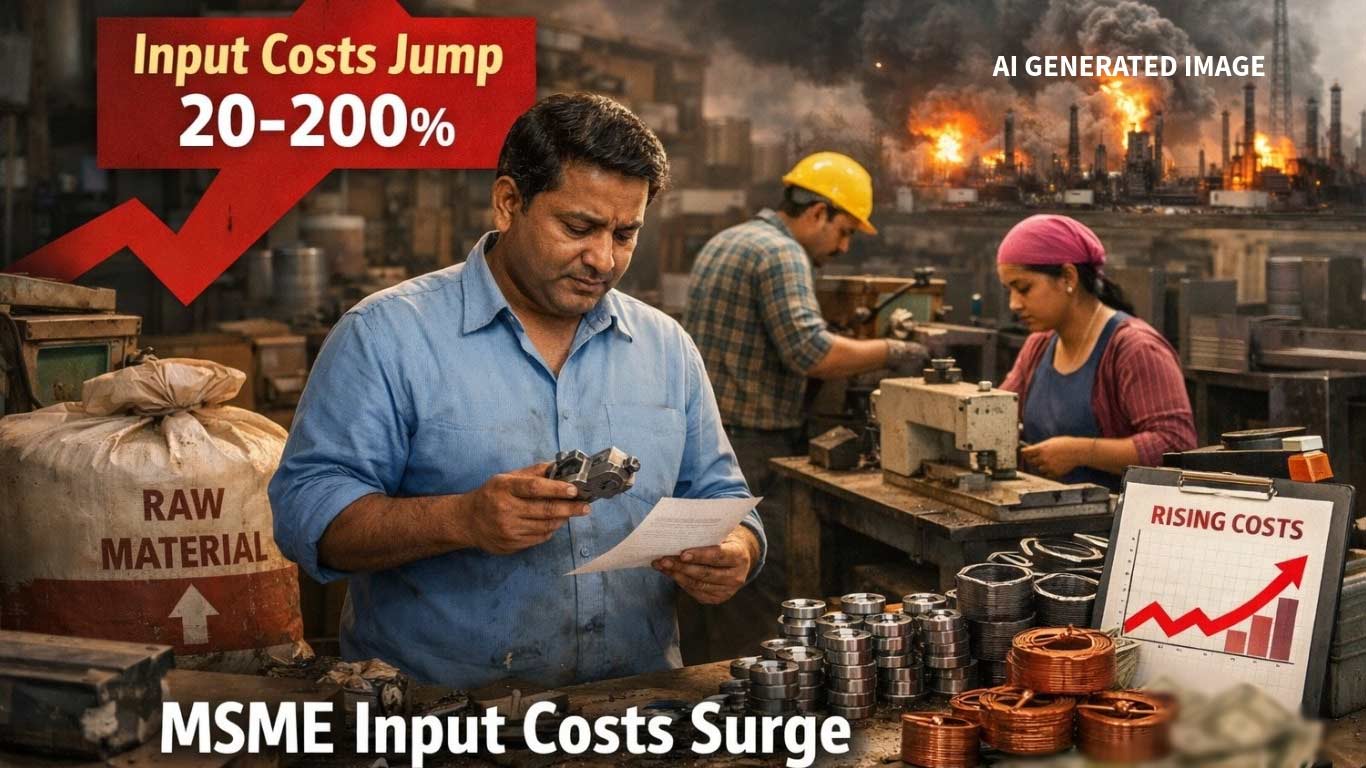
MSMEs Want Competition Watchdog To Rein In Monopoly Suppliers As Input Costs Jump 20-200%
Updated: May 18, 2026 11:48:23am

MSMEs Want Competition Watchdog To Rein In Monopoly Suppliers As Input Costs Jump 20-200%
New Delhi, May 18 (KNN) Micro, small and medium enterprises (MSMEs), reeling under the double whammy of soaring input costs and exports slowdown, want Competition Commission of India (CCI) to ensure key raw material suppliers do not misuse their monopoly position to keep prices high under the pretext of West Asia conflict.
"The MSME sector is very upset about the surge in petroleum products. The monopoly suppliers often raise prices of raw materials by three times and then cut it to create an impression that prices have been reduced. The government and the CCI should look into this," said Neeraj Kedia, Chairman of Muzafarnagar-based Chakradhar Chemicals.
He said that apart from the prices of petroleum products, prices of various non-ferrous items have also surged, thus making the operating environment very challenging.
"About 3-4 years back, we used to buy sulphur/sulphuric acid for Rs 4-6 a kilo. Today, it has reached Rs 33 a kilo. Given the situation, the government should completely ban export of sulphur and sulphuric acid," Mr Kedia highlighted.
He noted that in the last few months, prices of zinc and packaging materials have also substantially increased.
Surat-based Prashant Industries Director Prashant Patel echoed a similar view noting that prices of sulphur and sulphuric acid have skyrocketed.
"We have seen varying increases in prices of various raw materials. It ranges from 20% to 200%. The government and organisations supposed to ensure fair market practices must step in. There are large companies which are taking advantage of their monopoly position. We have seen a slowdown in both the domestic and exports market. We need to be shielded from the unprecedented shocks," he said.
Ever since full-blown conflict began in West Asia and gradually widened, crude oil and gas prices have surged to record high in many years. Besides increase in prices, their supplies have also been badly affected as a result of virtual closure of Strait of Hormuz, one of the world's vital sea routes.
The impact of the high crude oil and gas prices has been immediate with oil companies raising prices of diesel, petrol, CNG and LPG. The prices of various petroleum derivatives such as synthetic materials and plastics have also gone up substantially.
Driven by higher prices of mineral oils, crude petroleum and natural gas, basic metals, manufactured products, and non-food articles, India's wholesale price index (WPI)-based inflation surged to a 42-month high of 8.3% in April, 2026.
The situation going forward is expected to worsen if the West Asia conflict prolongs. Prime Minister Narendra Modi has hinted that coming months may be more challenging. In an appeal to the general public, he recently called for cutting gold purchase, limiting foreign travel and working from home.
As prices of many key industrial items are on the rise leading to further thinning of margins, textile MSMEs are also battling for survival.
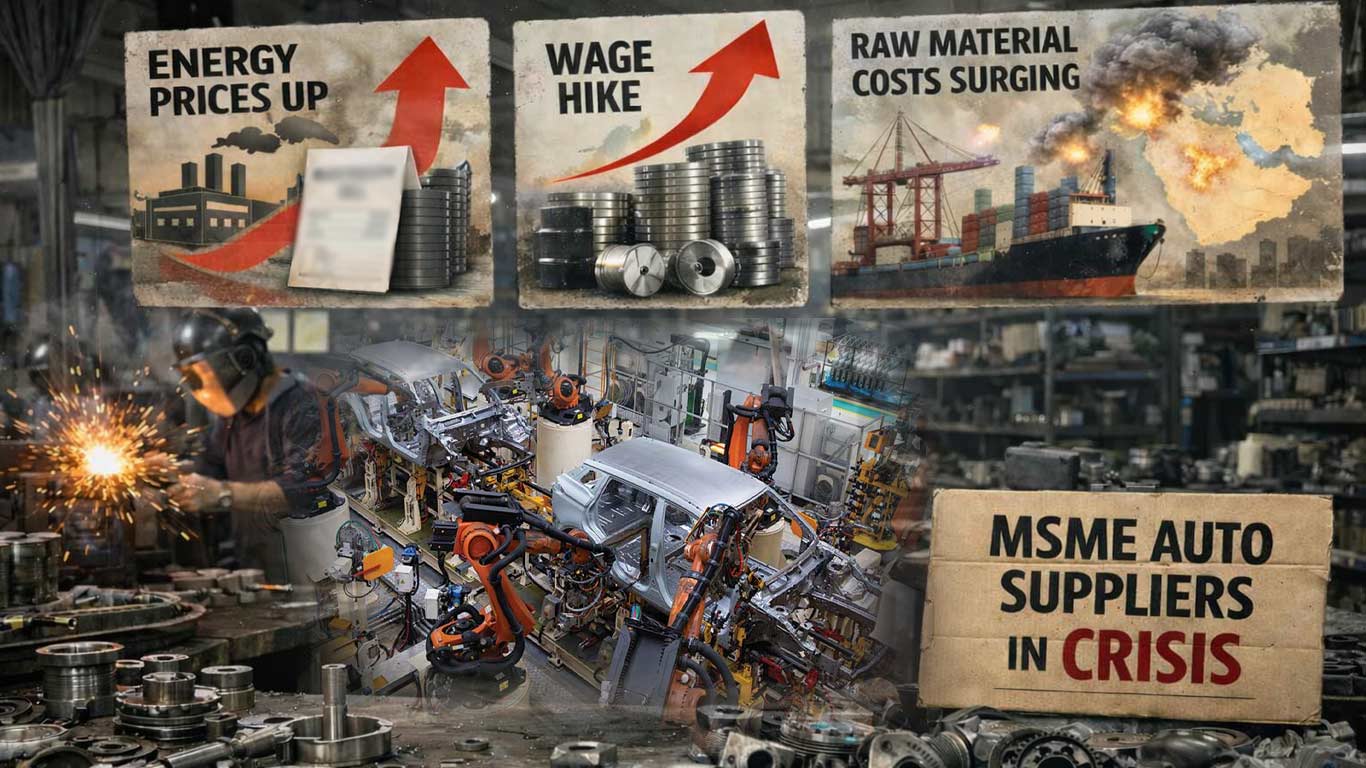
"Whether raw materials derived from petroleum or others, we initially saw 5-6% increase but in the last few months they have jumped 20-25%. In addition to this, exports are impacted and freight costs are very high. Besides, wage rates in the NCR region have also increased massively all of a sudden. Perhaps, fearing labour unrest, the government showed unusual haste in strictly enforcing the implementation of higher wage rates. All these together are taking a heavy toll on the industry," said Animesh Saxena, Managing Director, Neetee Apparel LLP and also former president of Federation of Indian Micro and Small & Medium Enterprises (FISME).
Companies involved in exports of metals and metal products also appear to be severely impacted by the input cost increase.
Arun Kumar Garodia, Managing Director of Corona Steel Industry Pvt Ltd and former chairman of apex engineering exports promotion body EEPC India said that manufacturer-exporters using steel as their raw material are facing double whammy of high input cost and punitive duty in the US, the largest market for Indian engineering goods.
"Government must do something to ensure that key raw material suppliers do not form a cartel and fix unreasonably high prices," he said.
Amid the impact of the West Asia conflict, the government has taken several steps to cushion MSMEs. They include schemes such as Emergency Credit Line Guarantee Scheme (ECLGS 5.0) and Resilience & Logistics Intervention for Export Facilitation (RELIEF).
(KNN / Nirbhay)





 Loading...