India–UK Trade Pact May Open New Export Opportunities Across Manufacturing, Services & Tech: PHDCCI
Updated: Jul 16, 2026 04:05:16pm


India–UK Trade Pact May Open New Export Opportunities Across Manufacturing, Services & Tech: PHDCCI
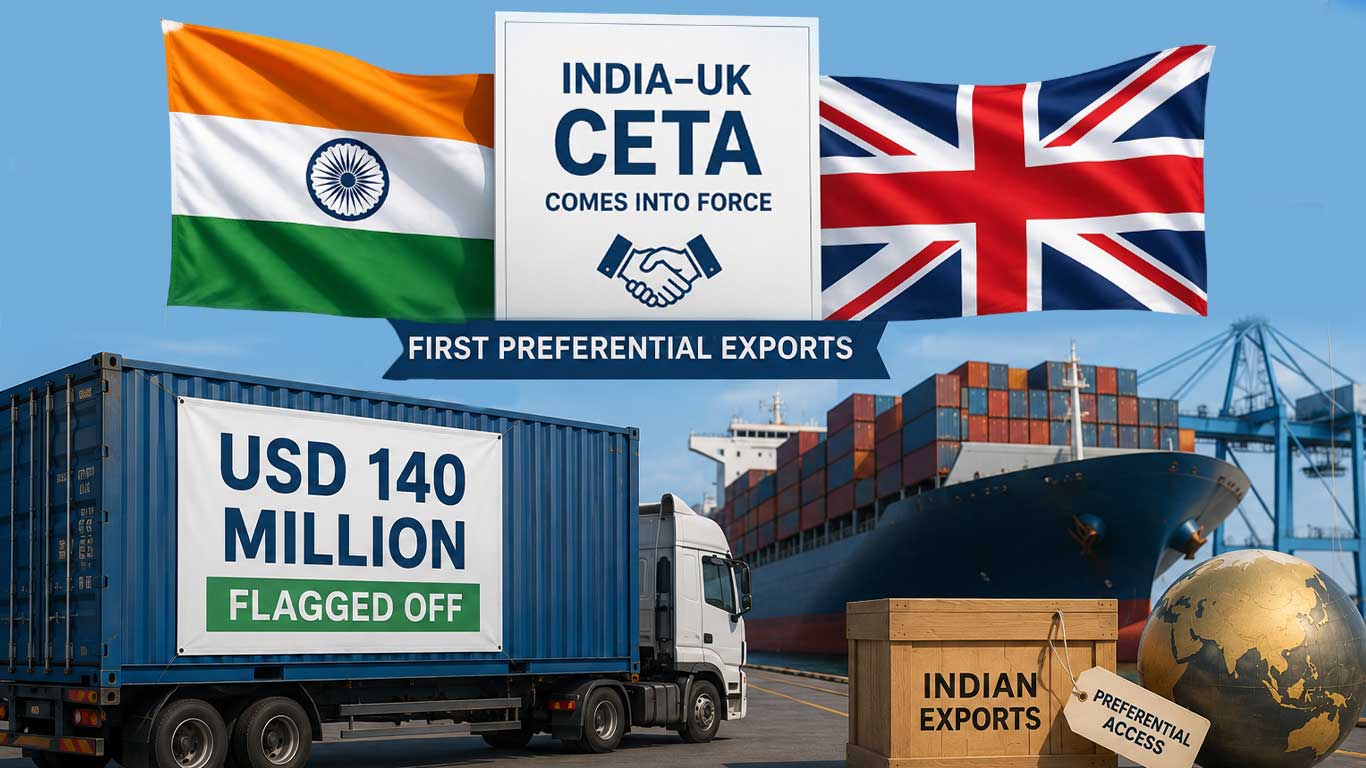
New Delhi, Jul 16 (KNN) The PHD Chamber of Commerce and Industry (PHDCCI) has said the India–UK Comprehensive Economic and Trade Agreement (CETA) could unlock significant export opportunities for India across manufacturing, technology and services sectors.
In a report titled ‘India–UK CETA: A Strategic Guide to Export Opportunities and Market Access’, the industry body outlined the potential for stronger bilateral trade, improved supply chains and deeper technology collaboration between India and the United Kingdom.
PHDCCI President Rajeev Juneja said, “India's growing competitiveness in manufacturing, combined with the UK's strengths in innovation and advanced technologies, creates significant opportunities for expanding exports, attracting investment and integrating into global value chains.”
Exports and Trade Trends
According to the report, India’s exports to the UK reached USD 14.55 billion in FY2024-25, generating a trade surplus of nearly USD 6 billion. While trade moderated in FY2025-26, the agreement is expected to revive momentum by easing market access barriers and streamlining customs procedures.
The UK remains one of India’s key export destinations, accounting for around 3 per cent of total exports.
Shift Towards High-Value Manufacturing
The study noted a gradual shift in India’s export basket towards higher-value manufacturing goods. Key growth drivers include smartphones, pharmaceuticals, aluminium oxide, petroleum products, engineering goods, machinery components, footwear and processed agricultural products.
India has also strengthened its comparative advantage in sectors such as electronics, pharmaceuticals, jewellery and auto components, supported by domestic manufacturing capabilities and policy initiatives.
Strong Trade Complementarity
The report highlighted that India’s export profile aligns well with the UK’s import needs.
The Trade Complementarity Index has remained above 63, indicating strong potential for expansion under preferential tariff access. The Trade Intensity Index, close to one, suggests existing trade flows are near potential but can grow further with the agreement.
Rising Role of Services and Technology
Beyond goods, services exports—particularly in information technology and professional services—continue to play a significant role, with digital delivery accounting for a major share of UK imports from India.
The report also pointed to expanding cooperation under the UK–India Technology Security Initiative, covering areas such as artificial intelligence, semiconductors, telecommunications, biotechnology and advanced materials. These partnerships are expected to support innovation and investment.
Regulatory Compliance Remains Key
While the agreement offers improved market access, the report cautioned that exporters must meet regulatory requirements, including technical standards, product certifications, food safety norms and Rules of Origin compliance to fully benefit from the pact.
“Effective utilisation of the agreement will require greater awareness of Rules of Origin, regulatory standards and market-specific compliance requirements,” Dr. Ranjeet Mehta, Secretary General and CEO, PHDCCI, said.
(KNN Bureau)






 Loading...


